

Summary: To maintain mental health as a digital nomad, create portable routines, protect your work life boundaries, and make meaningful connection part of your schedule. Slow travel, regular movement, consistent sleep, and a practical support plan can help you manage loneliness, anxiety, travel burnout, and the pressure to remain productive while constantly adapting.
Freedom feels different when every new destination also brings a new bed, workspace, schedule, and social circle. A sustainable nomadic life depends on creating stability wherever you are, rather than waiting for your surroundings to provide it. Building connection is part of that process, so our guide on how to find the best communities for digital nomads can help you approach social support with intention.
If you are searching for how to maintain mental health as a digital nomad, begin with a simple principle: your wellbeing needs planning, not perfection. The goal is not to remove every difficult feeling from travel. It is to notice changes early, protect the habits that keep you grounded, and seek support before stress becomes overwhelming.
Why can nomadic freedom affect your mental health?
Have you ever arrived somewhere beautiful and felt too tired to enjoy it? Constant movement can create a gap between the life you imagined and the way you actually feel. New places bring stimulation and possibility, but they also require repeated decisions about accommodation, transport, food, workspaces, finances, and social plans.
That ongoing adaptation can quietly increase mental load. A 2026 analysis using five nationally representative surveys of American workers found that increased remote work was associated with more time spent alone and poorer wellbeing across several measures. The effects were concentrated among people living alone, according to the 2026 remote work dataset.
This does not mean that remote work or travel automatically damages mental health. Some people gain energy from independence, novelty, and flexible schedules. The important distinction is whether your freedom is supported by enough structure, social contact, rest, and financial predictability.
Pay attention to warning signs such as persistent exhaustion, irritability, disrupted sleep, loss of interest in exploring, frequent worry, or the feeling that every small decision is difficult. These signals do not represent a personal failure. They indicate that your current pace or support system may need to change.
How do you create stability that travels with you?
Imagine moving into a new apartment on Monday and feeling settled by Friday. You may not know the neighborhood yet, but you know when you wake up, where you work, when you exercise, and how you wind down. That familiarity is created through repetition.
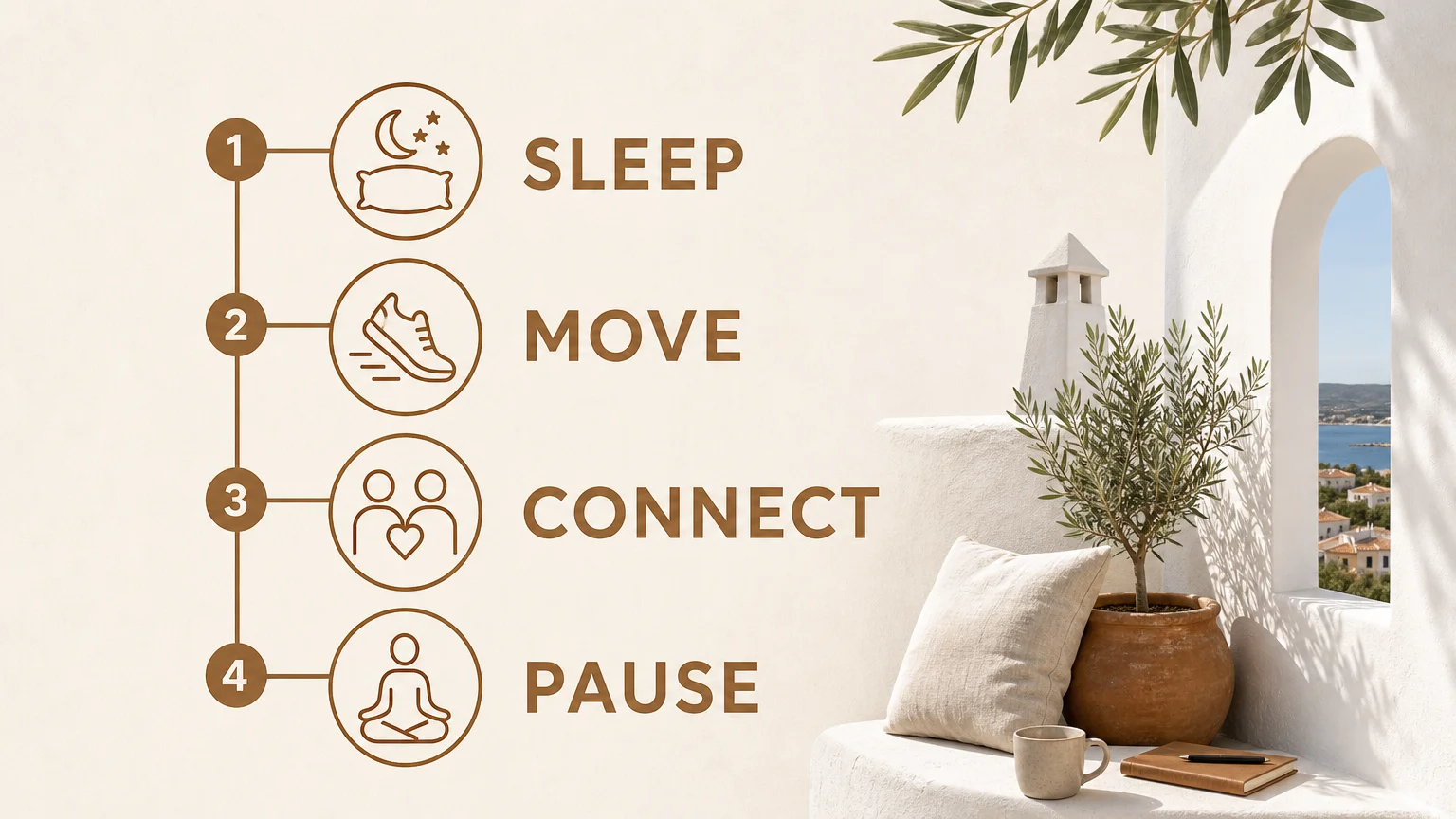
A portable routine gives your mind predictable points in an unpredictable lifestyle. Keep it realistic rather than rigid. For example, you could wake within the same one-hour window, drink water, spend ten minutes outside, review your priorities, and begin work from a consistent location.
Sleep deserves special protection. Use familiar cues such as an eye mask, earplugs, a calming evening ritual, and reduced screen exposure before bed. When crossing time zones, give yourself recovery time instead of expecting immediate productivity. Poor sleep can make ordinary travel challenges feel much more threatening.
Movement also helps you reconnect with your body after long periods at a screen. Walking through a neighborhood, stretching between calls, swimming, running, or practising yoga can support energy and mood without requiring a full gym routine. Food and hydration matter as well, particularly when irregular meals make you more vulnerable to stress.

What does a healthy work life boundary look like on the road?
A workday that begins with email in bed and ends with messages at midnight has no clear stopping point. Even if your schedule is flexible, your nervous system still benefits from knowing when work begins and when it ends.
Choose one primary workspace whenever possible. It can be a coworking desk, a quiet room, or a reliable table in a local café. A dedicated setting creates a psychological transition between professional focus and personal time.
Use visible boundaries. Set a start time, define the most important tasks, schedule breaks, and choose a clear shutdown ritual. Closing your laptop, taking a short walk, changing clothes, or preparing dinner can tell your brain that work is complete.
Research published in 2026 examined wellbeing in remote work through digital ethnography and highlighted the importance of resources, boundaries, and time in shaping how people experience work. The remote wellbeing study supports a practical conclusion: flexibility works better when it includes deliberate limits.
You should also communicate your availability clearly across time zones. If you work with clients or colleagues in several countries, explain your working hours and response expectations. This reduces the pressure to remain permanently reachable.
How can community protect you from loneliness?
One friendly conversation does not always become meaningful support. Digital nomads often meet many people while still lacking relationships where they can speak honestly about stress, homesickness, or uncertainty.
Build connection at several levels. Keep regular contact with people at home through scheduled calls rather than occasional messages. At the same time, create local relationships through coworking spaces, language classes, sports groups, volunteer activities, community dinners, or recurring meetups.
Consistency is more important than quantity. Seeing the same people each week gives relationships time to deepen. You do not need to attend every event or maintain a large network. Two or three dependable connections can provide more emotional support than constant social activity.
Community should also include professional understanding. People who work remotely can relate to deadline pressure, unstable routines, client uncertainty, and the strange experience of combining travel with responsibility. To explore this principle further, read our article about the importance of community in co-living.
Be honest when your mood is changing. You do not need to present a perfect travel experience. Saying that you feel tired, lonely, or overwhelmed often creates space for others to respond with similar honesty.
Could slow travel make digital nomad life more sustainable?
What changes when you stay in one place for a month instead of moving every few days? You have more time to learn the local rhythm, establish practical habits, develop relationships, and recover from the journey itself.
Slow travel reduces the number of transitions your mind must process. It can also make work more reliable because you are not repeatedly searching for internet access, quiet accommodation, transport, groceries, and a suitable place for calls.
Slowing down does not mean abandoning curiosity. You can still explore, meet people, and take spontaneous trips. The difference is that discovery happens around a stable base instead of replacing one.
A 2026 systematic review examined 20 longitudinal studies published between 2017 and 2024. Its findings emphasised that the health effects of teleworking depend greatly on the surrounding psychosocial work environment, as described in the teleworking review. For a nomad, the environment includes the home, workspace, community, schedule, and pace of movement.
Our perspective on a slower life in coliving explores why a more deliberate rhythm can support both productivity and wellbeing. You may discover that fewer destinations create richer experiences.
How should you respond to travel burnout?
Before booking another flight, pause and assess your actual capacity. Travel burnout can appear as emotional flatness, impatience, poor concentration, physical tension, or the inability to enjoy activities that usually interest you.
Start with a recovery period. Spend a day without sightseeing, reduce unnecessary commitments, and choose simple meals and familiar surroundings. If possible, extend your stay rather than forcing yourself into another transition.
Reduce decision fatigue by preparing repeatable solutions. Keep a short list of reliable meals, preferred workspaces, exercise options, and transport choices. Pack familiar items that support sleep and focus. Small systems reduce the number of choices you must make when your energy is low.
It is also helpful to separate adventure from obligation. You do not need to visit every landmark, attend every event, or make every day memorable. Rest is not wasted travel time. It is what allows you to remain present when you do explore.
What should be included in a personal mental health plan?
Consider a moment when your usual strategies stop working. You are sleeping poorly, avoiding messages, missing deadlines, and feeling disconnected from the place around you. A plan prepared in advance can help you act before the situation becomes a crisis.
Your plan should include the people you can contact, the habits that usually stabilise you, and the professional resources available in your current location. Keep important contact details accessible, including your health insurer, doctor, therapist, and local emergency services.
Online therapy may provide continuity when you are moving between destinations, but rules about professional licensing, insurance, privacy, and emergency care can vary by location. Confirm these details before you travel. If you already work with a mental health professional, discuss how travel may affect your care.
Create a brief weekly emotional check-in. Ask yourself whether you feel rested, connected, focused, and interested in daily life. Record the answers without judgement. Patterns are easier to notice when you write them down.
How can your environment support better habits?
The most useful wellbeing choice may happen before you arrive. When choosing accommodation, look beyond attractive photographs and ask whether the setting supports sleep, focused work, movement, privacy, and connection.
Check the practical details. Is the internet reliable? Is there a suitable place for calls? Can you work without using your bed as an office? Are shared spaces comfortable? Can you access food, exercise, nature, and transport without constant logistical stress?
A calm environment can make healthy choices easier, especially when it combines private space with opportunities to meet others. At POMAR, our private-room coliving experience is designed for people who want focused work, shared living, hosted community activities, and access to the Algarve at a more manageable pace.
Location also affects your nervous system. Some people feel restored by a quiet countryside setting, while others need the energy of a town or the openness of the coast. Our guide to escaping the hustle and bustle of city life in the Algarve can help you consider whether a slower environment suits your current needs.
Choose the setting that matches your present capacity, not the identity you want to perform online. A peaceful week may be more valuable than an ambitious itinerary when you are already depleted.
A healthier nomadic life is built, not discovered
Maintaining mental health as a digital nomad requires a balance between freedom and structure. Protect your sleep, create visible work boundaries, move regularly, schedule meaningful connection, and give yourself permission to stay longer when your body and mind need recovery. A support plan makes it easier to respond early, while a suitable environment removes friction from the habits that keep you well. You do not need to travel less to feel better, but you may need to travel more intentionally.
Take action with POMAR coliving
If your mental health improves when work, rest, nature, and community are easier to balance, your choice of base matters. A hosted environment can reduce daily logistics while giving you enough privacy to recover, focus, and maintain your own rhythm.
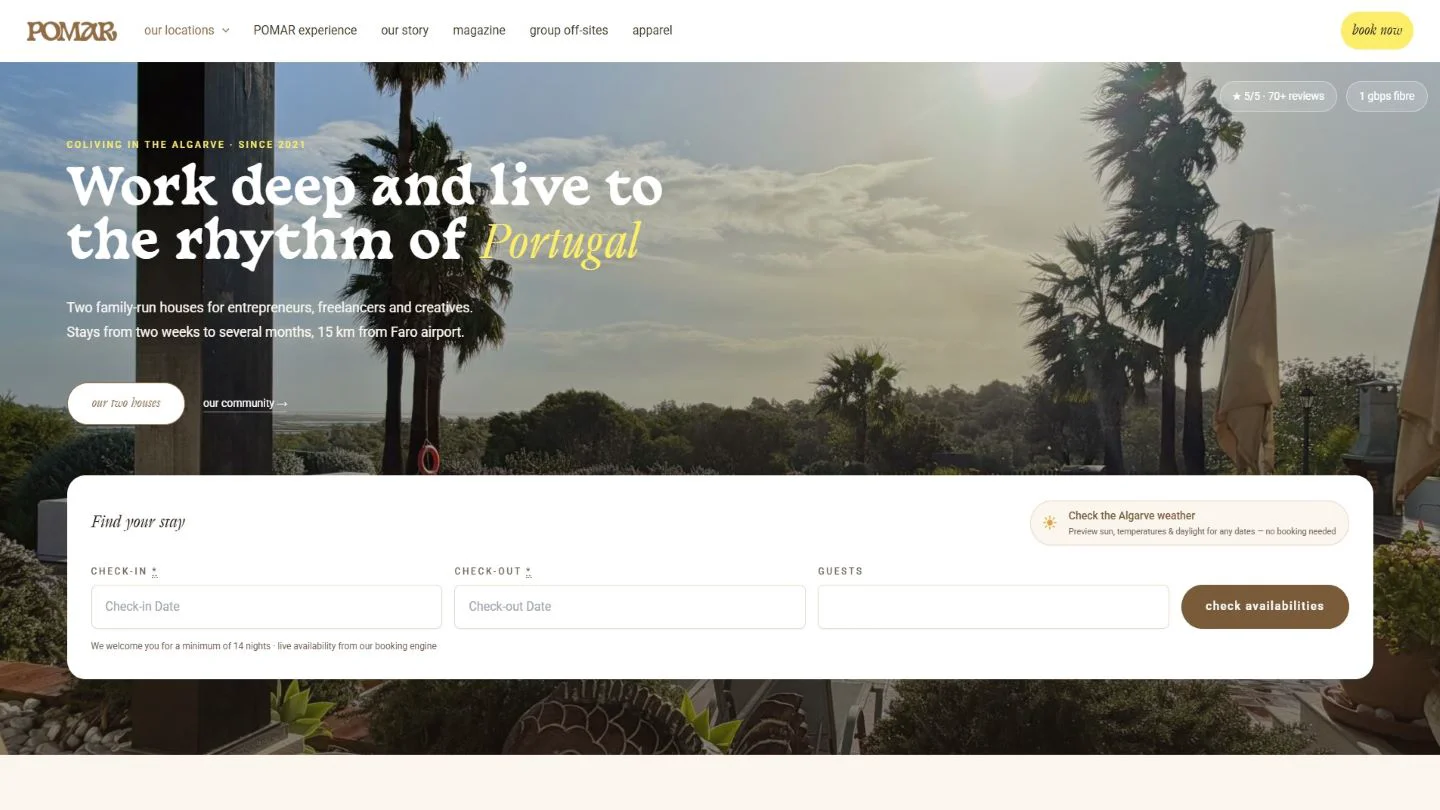
At POMAR, we combine private rooms, coworking areas, reliable connectivity, ergonomic work equipment, on-site hosts, wellness options, community dinners, workshops, and local activities. You can explore a more grounded work and travel routine through coliving in the Algarve, with locations and experiences suited to different ways of living and working.
Frequently Asked Questions
How can I avoid loneliness as a digital nomad?
Schedule regular calls with people at home and create recurring local connections through coworking, classes, sports, or community events. Focus on seeing a few people consistently instead of attending as many social activities as possible.
What routine is most helpful for digital nomad mental health?
A useful routine usually includes consistent sleep, a defined work period, daily movement, regular meals, and time away from screens. Keep it flexible enough to survive travel while preserving a few predictable anchors.
How do I know if I am experiencing travel burnout?
Persistent exhaustion, irritability, poor sleep, low concentration, and a loss of interest in exploring can indicate that your pace is too demanding. Take recovery time and consider extending your stay before making another move.
Can coliving support mental health while travelling?
Coliving can provide a balance between private space and regular social contact, especially when hosts and community activities are available. It is not a substitute for professional care, but it can reduce isolation and make healthy routines easier to maintain.
When should I seek professional mental health support?
Seek support when difficult feelings persist, interfere with work or daily life, or become difficult to manage alone. If you may harm yourself or someone else, contact local emergency services or an appropriate crisis service immediately.