
Summary: The strongest staff retreat themes connect a clear team need with purposeful sessions, suitable activities, and measurable follow-up. Choose a theme around shared purpose, communication, leadership, wellness, creativity, inclusion, professional growth, or connection, then adapt the setting and schedule to your team’s working style.
A strong retreat begins with a question: what does your team need most at this moment? If the answer involves clearer direction, stronger relationships, or renewed energy, our board retreat planning ideas can help you frame the conversation before choosing a destination or activity.
Retreats are becoming more intentional in 2026. A survey published in the 2026 retreat report found that 49% of surveyed U.S. travelers planned to spend on a retreat during 2026. For staff teams, the lesson is practical: people are more likely to value time away when it has a clear purpose, respects individual needs, and creates space for meaningful connection.
What makes a staff retreat theme effective?
A theme is more than a title placed at the top of an agenda. It is a practical decision-making framework that helps you choose what belongs in the retreat, what should be left out, and what participants should take back to work.
Effective staff retreat themes usually have three qualities. First, they respond to a real team need, such as communication gaps or strategic uncertainty. Second, they can be expressed through several formats, including workshops, conversations, meals, movement, and quiet reflection. Third, they lead to a visible outcome, such as agreed priorities, new working agreements, or individual development commitments.
The theme should also match your culture. A playful creative theme may suit an informal design team, while a mission and purpose theme may be more appropriate for a nonprofit or public-service organization. Neither approach is automatically better. The right choice is the one that feels credible to your employees and useful to the work ahead.
This matters because connection is often a central reason for attending professional gatherings. Hilton’s 2026 meetings research found that 49% of respondents expected meeting new people and bonding with colleagues to be the main reason they attended work events in 2026. That finding supports a balanced approach, where the theme shapes both business sessions and informal interactions.
8 staff retreat themes matched to real team needs
Which theme should you choose? Start with the outcome you want, then select a concept that can guide the whole experience rather than a collection of unrelated games.
| Theme | Best suited to | Useful sessions and activities | Possible outcome |
|---|---|---|---|
| Shared purpose | Teams facing change, growth, or uncertainty | Mission reflection, customer stories, values discussions, future visioning | A clearer sense of direction and priority |
| Communication and collaboration | Teams experiencing silos or recurring misunderstandings | Working-style discussions, real case workshops, cross-team problem solving | Practical communication agreements |
| Leadership and innovation | Managers, founders, or teams preparing for the next stage | Scenario planning, strategic debates, decision-making exercises | Shared leadership priorities and experiments |
| Wellness and sustainable performance | Teams managing high workloads or burnout risk | Breathwork, gentle movement, workload reflection, recovery planning | More realistic habits and support commitments |
| Creativity and new perspectives | Creative, product, marketing, and innovation teams | Art workshops, design challenges, brainstorming, local cultural experiences | New ideas and more flexible thinking |
| Professional development | Teams seeking stronger skills or career progression | Peer teaching, mentoring, public speaking, negotiation practice | Individual growth goals and shared learning |
| Inclusion and belonging | Growing or multicultural teams | Listening circles, inclusive decision-making, personal stories, access reviews | Greater awareness and more inclusive practices |
| Connection and appreciation | Remote, hybrid, or recently reorganized teams | Shared meals, storytelling, gratitude, optional outdoor activities | Stronger relationships and renewed morale |
You can combine themes, but avoid choosing too many. A retreat built around shared purpose may include wellness and connection elements, yet its central question should remain clear. When every theme receives equal weight, the experience can become pleasant but directionless.
How do you turn a theme into a working agenda?
Once you have selected a theme, translate it into a simple sequence: understand the current situation, explore the issue together, make decisions, and define what happens next.
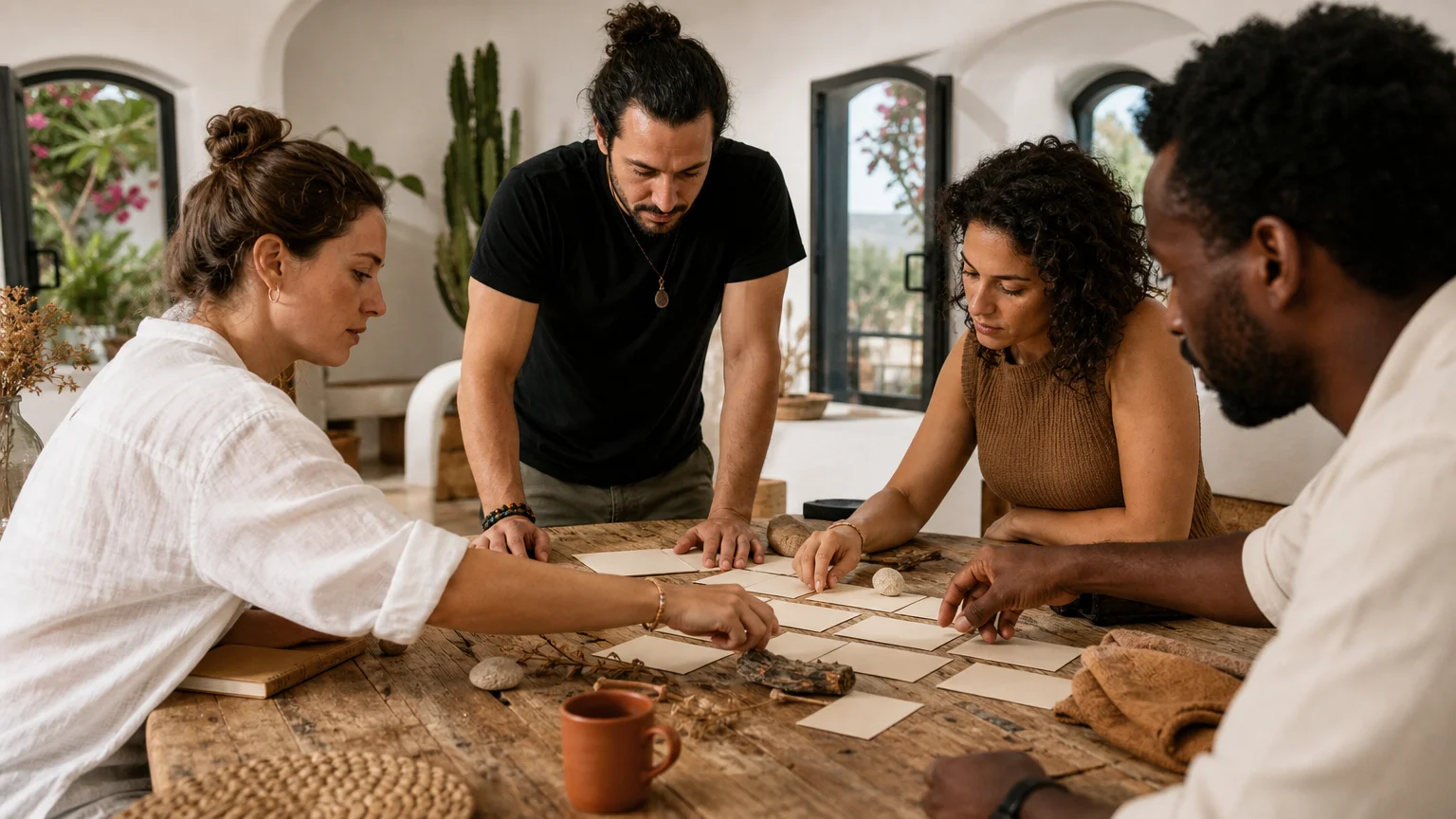
For a shared-purpose retreat, the morning could begin with a review of recent achievements and unresolved questions. Small groups might then discuss what the organization should protect, change, or stop. The afternoon can focus on a short list of priorities, with named owners and realistic deadlines.
For a communication theme, replace generic icebreakers with real workplace situations. Ask participants to examine where information becomes unclear, which decisions are delayed, and what each department needs from the others. A short working agreement can be more valuable than a competitive team game because it remains useful after everyone returns to work.
For a wellness theme, resist the temptation to fill the schedule with treatments and activities. Include quiet time, optional movement, and honest discussion about workload patterns. Wellness should support sustainable performance, not become another obligation that employees must complete.
Our team meeting venue in the Algarve is designed for groups that need both focused work and a change of setting. We provide coworking areas, fiber connectivity, ergonomic equipment, conference-call space, whiteboards or flip charts on request, and standing desks. Coworking day access requires advance booking, with stated capacity for 8 residents and up to 12 people during the day.
Keep the agenda lighter than a normal workday. A useful rhythm combines one substantial working block, a real break, a shared meal, an activity or conversation, and unstructured time. People need space to process ideas, continue informal conversations, or recharge privately.
How should you adapt a retreat theme to your team?
The same theme can produce very different experiences depending on team size, working arrangement, accessibility needs, and existing relationships. A small leadership group may need confidentiality and extended discussion, while a larger department may need breakouts and clear participation structures.
For remote and hybrid teams, plan for connection rather than forced uniformity. Some employees may want active social time, while others may prefer smaller conversations or quiet periods. Offer alternatives where possible, communicate which sessions are essential, and avoid treating high energy as the only sign of engagement.
Accessibility should be part of the theme design from the beginning. Ask about mobility, dietary requirements, sensory sensitivities, religious practices, health needs, and caregiving responsibilities before confirming the agenda. Outdoor activities should have lower-intensity alternatives, and evening events should not be the only opportunity for social participation.
Location also affects participation. A countryside setting can support focus and reflection, but transport and local amenities may be limited. A beachside location can encourage movement and informal conversation, yet weather conditions may influence the schedule. Consider what your theme requires before selecting the most attractive setting.
We can discuss partial or complete house privatization for businesses and professional groups, subject to availability and direct consultation. Our standard coliving arrangement does not accommodate children or pets, while families and groups seeking a private setting can ask about complete home privatization.
How can you create connection without forced fun?
Connection grows more naturally when people have a shared task, a comfortable setting, and enough time to speak without rushing. It does not require every participant to perform enthusiasm in front of the group.
Choose activities that reveal how people think and collaborate. Shared cooking can show how a group delegates and communicates. A guided walk can create easier one-to-one conversations than a formal meeting room. A creative workshop can give quieter participants another way to contribute.
Storytelling also works well when the prompt is specific and voluntary. Participants might share a professional lesson, a place that shaped them, or an experience that changed how they approach their work. Avoid questions that demand private disclosure, and allow people to pass without explanation.
Our team retreat activity ideas in the Algarve include options connected with outdoor movement, local experiences, wellness, food, and community. Activities can be discussed according to your group’s interests, although partner availability and direct arrangements may affect what can be scheduled.
Shared meals can become a central part of the retreat when they are not treated as simple catering breaks. Rotate seating, offer thoughtful prompts, and leave enough time for conversation. A weekly family dinner, workshops, talks, skill-sharing, and brainstorming are part of our community programming, with schedules shaped around guest interests rather than a guaranteed custom agenda.
What should a theme produce after the retreat?
A retreat theme becomes meaningful when it leads to decisions, changed habits, or a clearer understanding of the work. Before the event, define two or three outcomes that you can review afterwards.
For a strategy theme, the outcome could be three agreed priorities and a list of risks. For a communication theme, it could be a team charter covering response times, meeting practices, and decision ownership. For a wellness theme, it could be a realistic set of workload changes and manager commitments.
Use a visible closing process. Ask each group to state what was decided, what remains unresolved, who owns the next action, and when progress will be reviewed. Record these points while the discussion is fresh, rather than relying on informal memories.
A 2026 staff strategy meeting report from HDRL described a format that combined lightning talks, breakout discussions, group participation, and voting on strategic ideas. The example is useful because it shows how a retreat can move from broad contribution to prioritization instead of ending with a long list of unranked suggestions.
Follow-up should happen at several intervals. Send a concise summary within a few days, review action owners after about a month, and revisit the original outcomes after one quarter. A short survey can ask whether the retreat achieved its purpose, which part created the most value, and what should change next time.
How does the setting support the chosen theme?
A retreat setting should make the desired behavior easier. If you want strategic thinking, choose a place with reliable connectivity, quiet work areas, and enough privacy for focused discussions. If you want connection, prioritize shared spaces, meals, and activities that do not require constant formal facilitation.
At POMAR, we support professional retreats, seminars, remote team meetings, wellness retreats, and related group arrangements through direct consultation. Our Algarve locations combine private rooms, shared living spaces, coworking infrastructure, on-site hosting, wellness facilities, and access to local activities.
Our retreat ideas in the Algarve can help you compare different formats before deciding whether your team needs a focused strategy session, a wellness-oriented stay, a connection retreat, or a broader offsite experience. The right choice depends on your objectives, group size, schedule, budget, and accessibility requirements.
Remember that the venue is not the theme. A beautiful setting cannot compensate for unclear objectives, and a simple location can still support excellent work when the agenda is intentional. Select the place that helps your team behave in the way the theme requires.
Choose the theme your team needs now
The best staff retreat themes are specific enough to guide decisions but flexible enough to include different personalities and working styles. Begin with one genuine team need, build a balanced agenda around it, and finish with clear commitments, owners, and follow-up. When the theme, activities, setting, and outcomes reinforce one another, the retreat becomes more than time away from work. It becomes a practical reset for how the team works together.
Plan a retreat around your team’s goals
If you have identified a theme but still need to connect it with the right setting, schedule, and activities, we can help you explore suitable options in the Algarve. Our team works with businesses and professional groups planning retreats, seminars, remote team meetings, wellness stays, and private group arrangements.
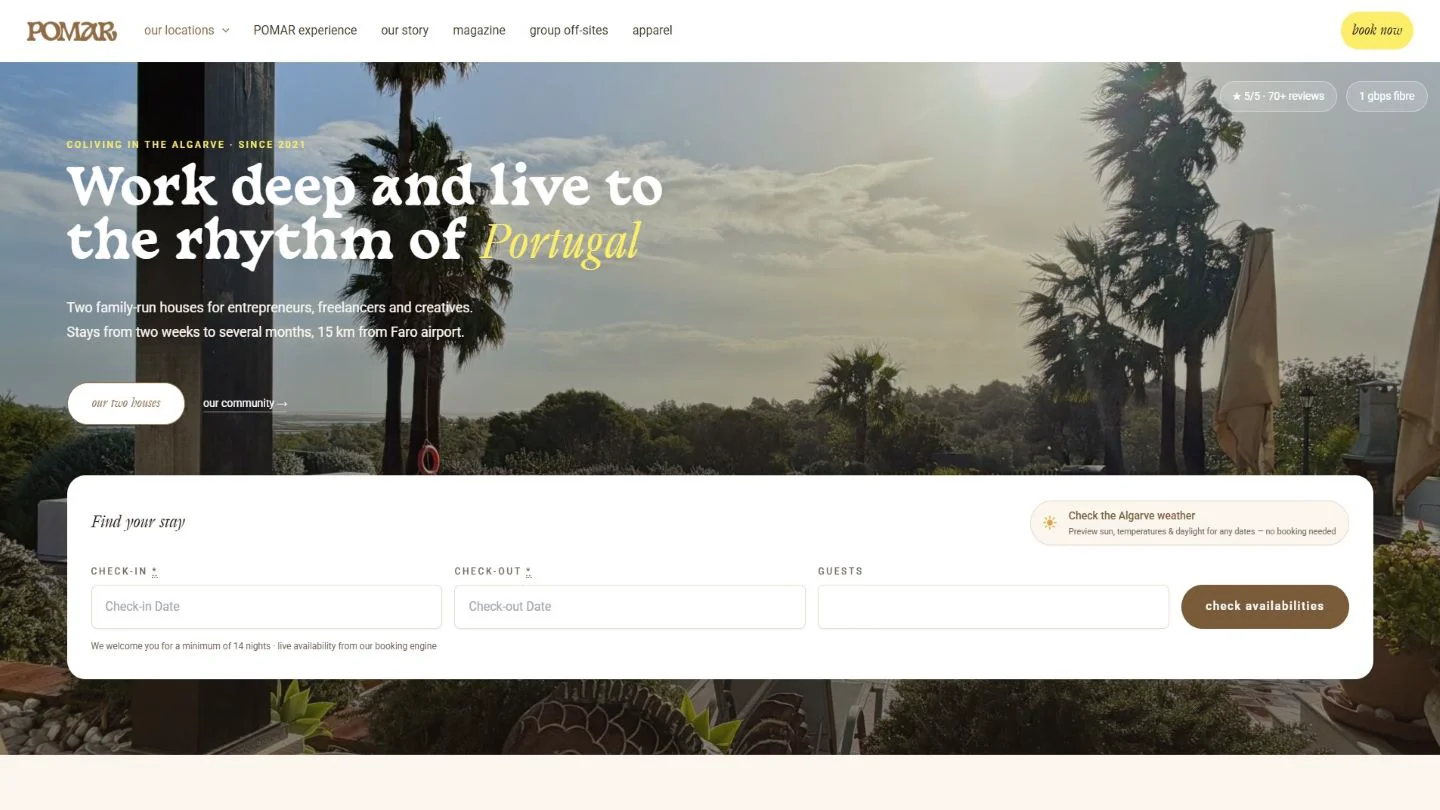
Our locations combine private-room accommodation, coworking spaces, reliable connectivity, shared living areas, on-site hosting, wellness options, and access to local experiences. We can discuss your group’s objectives, dates, preferred level of privacy, and practical requirements. Explore coliving in the Algarve for your team retreat and contact us about an arrangement suited to your team.
See our Workation & Retreat offers on our dedicated website.
Frequently Asked Questions
What are the most effective staff retreat themes?
The most effective themes respond to a real team need, such as shared purpose, communication, wellness, leadership, creativity, inclusion, or professional growth. They should also lead to a practical outcome that participants can apply after the retreat.
How many themes should a staff retreat include?
One central theme is usually easiest to understand and apply. You can include supporting elements, such as wellness or connection, but the main purpose should remain clear throughout the agenda.
How do you choose a theme for a remote or hybrid team?
Begin by identifying what the team cannot easily achieve through screens, such as informal connection, difficult conversations, or shared strategic focus. Then provide different ways to participate, including small groups, quiet time, accessible activities, and optional social moments.
What activities work with a staff retreat theme?
Choose activities that reinforce the intended outcome rather than simply filling time. Shared meals, workshops, guided walks, creative sessions, strategic discussions, storytelling, and wellness practices can all work when they connect directly to the theme.
Can POMAR support a staff retreat in the Algarve?
Yes, we can discuss professional retreats, seminars, remote team meetings, wellness retreats, activities, and partial or complete house privatization through direct consultation. Our Algarve locations also provide private rooms, coworking infrastructure, shared spaces, on-site hosting, and optional local experiences, subject to availability and arrangements.