

Summary: A professional development retreat combines focused learning, guided reflection, peer exchange, and meaningful time away from routine work. The strongest programs begin with measurable objectives, match sessions to participant needs, choose a venue that supports both concentration and recovery, and continue with clear follow-up actions after everyone returns.
What would change if your team had enough uninterrupted time to improve its skills, question familiar habits, and plan its next steps together? A professional development retreat creates that space by taking participants away from daily operational pressure. If you are planning a leadership gathering, our guide to board retreat planning can also help you structure decisions, responsibilities, and practical arrangements.
This format is more purposeful than a company holiday and more immersive than a standard workshop. It can serve employees, educators, researchers, founders, managers, or cross-functional teams. Its value depends less on the destination than on the connection between learning objectives, facilitation, participant needs, and the actions that follow the retreat.
What is a professional development retreat?
A professional development retreat is a planned experience that combines learning with distance from the normal work environment. Participants usually attend workshops, discussions, coaching sessions, peer exchanges, or practical exercises. They also receive time for reflection, informal conversation, and recovery.
The central purpose is professional growth. A retreat may focus on leadership, communication, teaching practice, creative thinking, research skills, management, collaboration, or career planning. The subject should be specific enough to guide the program, but broad enough to create useful connections between participants.
This makes the format different from a general team retreat. A team retreat may prioritize relationships, morale, or strategic alignment. A professional development retreat puts learning and capability building at the center. Social activities support the experience, but they should reinforce trust, reflection, or knowledge sharing rather than replace the core program.
It is also different from a vacation. A change of scenery can help people think differently, but the retreat still needs a defined purpose, a responsible facilitator, and a realistic schedule. Without those elements, participants may enjoy the destination while returning with few practical changes.
Which outcomes should the retreat produce?
Start with the result rather than the activity. “Improve leadership” is too broad to guide a useful agenda. “Help new managers practise feedback conversations and create a 30-day leadership action plan” is more precise.
Common outcomes include:
- Developing a defined professional skill, such as negotiation, facilitation, communication, or coaching.
- Creating a personal development plan with practical next steps.
- Sharing knowledge across roles, departments, or institutions.
- Strengthening professional networks and peer support.
- Improving confidence in a specific responsibility or transition.
- Connecting individual development with team or organizational priorities.
Participant profile matters as much as the topic. Early-career professionals may benefit from networking, communication practice, and career positioning. Experienced managers may need confidential peer discussion, leadership reflection, and support with complex decisions. Educators and researchers may need protected time for writing, collaboration, or applied learning.
A 2025 Kyoto study describes a retreat program developed for teachers and delivered in one-day and three-day formats. Participants reported high satisfaction and perceived improvements in professional development and wellbeing. The result is specific to that program and participant group, but it illustrates why the learning design should match the professional context.
Define success in observable terms. By the end of the retreat, participants might need to complete a draft plan, practise a new method, identify a priority, exchange peer feedback, or agree on a shared commitment. These outputs make evaluation more useful than asking only whether participants enjoyed the experience.
How should you design the learning experience?
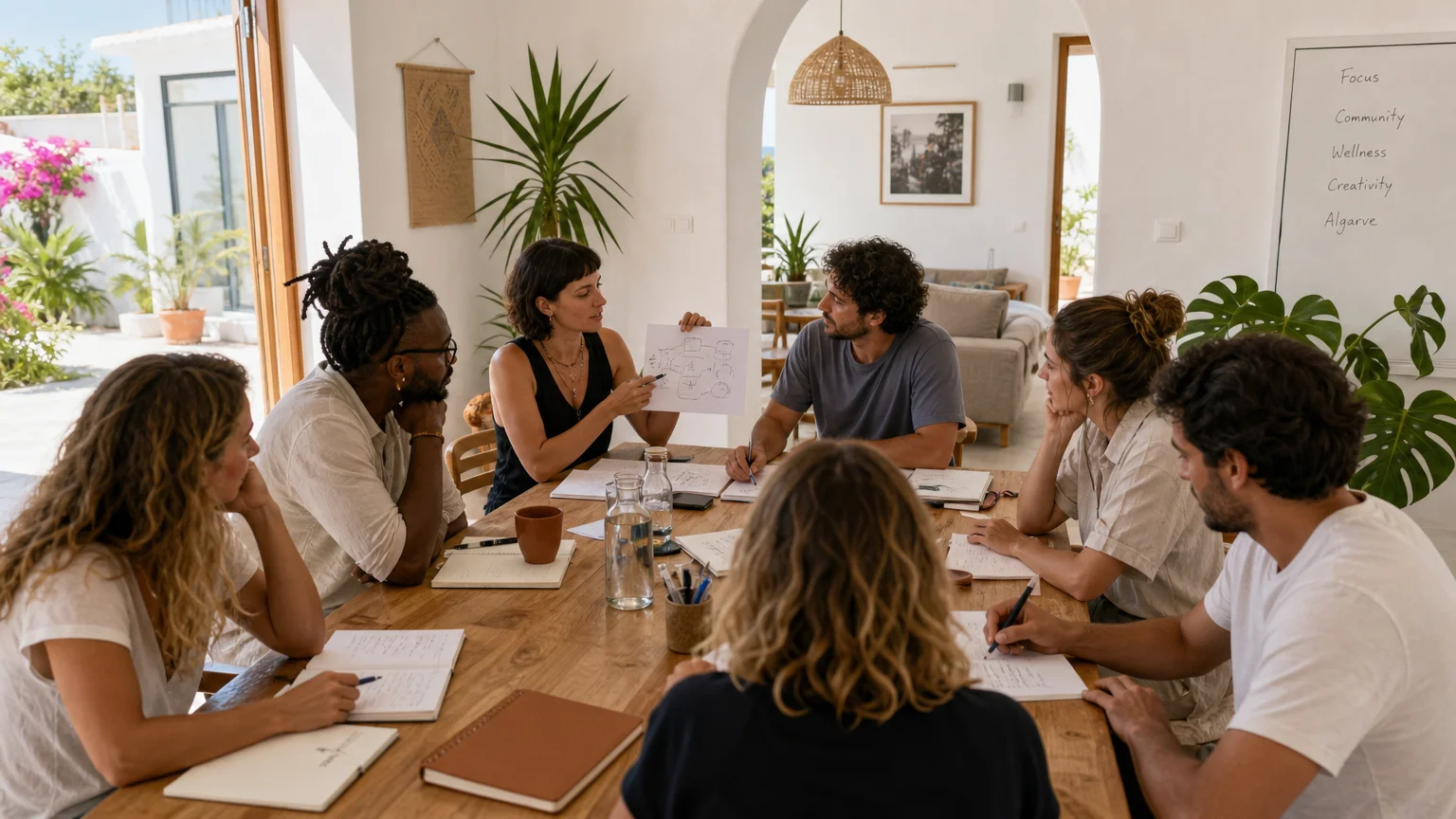
The strongest programs alternate between different forms of attention. A full day of presentations can exhaust participants without creating meaningful practice. A more effective rhythm combines expert input, small-group work, individual reflection, informal conversation, and breaks.
A useful structure might include:
- Opening context: Explain the purpose, expected outcomes, schedule, and participation principles.
- Expert learning: Introduce a framework, method, or body of knowledge relevant to the group.
- Application: Give participants a realistic case, scenario, or project to work on.
- Reflection: Provide quiet time to connect the learning with individual responsibilities.
- Peer exchange: Let participants compare experiences and offer practical feedback.
- Commitment: Convert insights into specific actions, owners, and review dates.
Preparation improves the quality of discussion. You might ask participants to complete a short survey, bring a current challenge, review a shared document, or define one skill they want to practise. The preparation should be proportionate. Excessive pre-work can make attendance feel like another workload rather than an opportunity for growth.
Facilitation also deserves careful attention. The facilitator should manage time, invite quieter voices, clarify disagreements, and connect activities to the stated objectives. A neutral facilitator can be particularly useful when senior leaders are participating, because it allows them to contribute without carrying the entire responsibility for the room.
For activity ideas that keep the program purposeful without making every moment feel like a meeting, explore our guide to staff retreat themes. The best theme is not simply memorable. It helps participants understand why the retreat exists and how each activity supports the intended outcome.
How do you choose the right venue and logistics?

The venue should make the intended behavior easier. If the retreat requires confidential conversations, choose rooms with acoustic privacy. If participants need deep work, provide reliable connectivity, comfortable seating, power access, and quiet areas. If the program includes physical or outdoor activities, confirm the conditions, equipment, transport, and accessibility in advance.
Accommodation can reduce friction when participants stay close to the learning space. Private rooms may give attendees the recovery time they need, while shared lounges and communal meals create opportunities for informal exchange. The balance depends on the group. Not everyone wants continuous social contact, so a good venue should support both connection and personal space.
Technology should be dependable but not dominant. Confirm internet performance, presentation equipment, power outlets, lighting, sound, and backup options. A professional retreat may involve remote contributors or online resources, but the physical setting should not recreate the distractions of an ordinary office.
For teams considering Portugal, our Algarve remote team meeting venue guide explains the practical questions to ask about workspaces, connectivity, accommodation, and local arrangements. At POMAR, we support professional events, seminars, offsites, remote team meetings, and partial or complete house privatization through direct consultation.
Venue logistics should also cover arrival times, dietary requirements, mobility needs, room allocation, emergency contacts, weather alternatives, and transport. A beautiful setting cannot compensate for unclear instructions or difficult access. Send participants a concise information pack before arrival, including the purpose of the retreat, what to bring, the schedule, and how to request support.
How can you balance learning, connection, and recovery?
A professional development retreat should create enough structure to produce progress, but enough space for participants to think. The right balance will vary by audience and duration. A focused one-day program may need shorter breaks and a tighter scope. A multi-day retreat can include deeper reflection, outdoor activities, and more informal exchange.
Use a rhythm that protects attention. For example, a morning learning block can be followed by a practical workshop, lunch, and a quieter afternoon session. A walk, shared meal, or local activity can then provide a less formal setting for conversations that may not happen in a meeting room.
Choice improves inclusion. Some participants may welcome a demanding outdoor activity, while others may prefer a cultural visit, quiet reading, or informal conversation. Offering meaningful alternatives helps people participate according to their energy, interests, and physical needs.
Wellbeing should not be treated as decoration. Rest, movement, nourishing meals, and time away from screens can help people remain present. At the same time, wellness activities should remain connected to the retreat’s purpose. A breathing session may support concentration, while a guided walk may create space for reflection and peer conversation.
Our retreats in the Algarve resource can help you consider how professional sessions might sit alongside outdoor experiences, local culture, and recovery time. At POMAR, we can coordinate selected activities, local guides, transfers, rentals, tours, and other arrangements, although availability and inclusion depend on the specific retreat plan.
What should happen after the retreat?
The retreat is not complete when participants leave the venue. Without follow-up, useful ideas can become pleasant memories rather than changes in professional practice.
End the program with a clear action process. Each participant should identify one or two commitments, a realistic deadline, and a way to review progress. Team commitments should have named owners. If the retreat produced decisions, record them in a shared document and communicate the next steps promptly.
Schedule follow-up before the retreat ends. A short meeting after two weeks can identify early progress and obstacles. A second review after 30 or 60 days can examine whether new skills or agreements are being used. Peer pairs can also provide informal accountability between formal check-ins.
Evaluation should combine immediate feedback with later evidence. Ask participants whether the sessions were relevant, whether they had enough time to practise, and what they intend to apply. Later, ask what changed in behavior, collaboration, confidence, or project progress. Avoid claiming that every outcome came from the retreat alone, because professional development usually depends on continued support.
A faculty retreat study describes a two-day interdisciplinary development event that combined presentations, discussion, wellness breaks, and group work. Its initial outcomes included self-reported increases in confidence and more publication submissions. These findings concern a specific academic setting, but they show the value of connecting retreat activities with concrete professional outputs.
Document what worked and what should change. The next retreat may need a different duration, a smaller group, more preparation, stronger facilitation, or more time for application. Continuous improvement turns a single event into a more reliable development process.
Make the retreat useful beyond the destination
A successful professional development retreat is a carefully designed learning environment, not simply a trip away from work. Define the capabilities or decisions that matter, build a balanced program around them, choose a venue that supports concentration and recovery, and create follow-up that keeps commitments visible. When every element serves the purpose, participants can return with clearer thinking, stronger connections, and practical actions they can continue using.
Plan Your Professional Retreat in the Algarve
If you need a setting that combines focused work, private accommodation, shared spaces, and local experiences, we can help you explore a practical retreat format in Portugal.
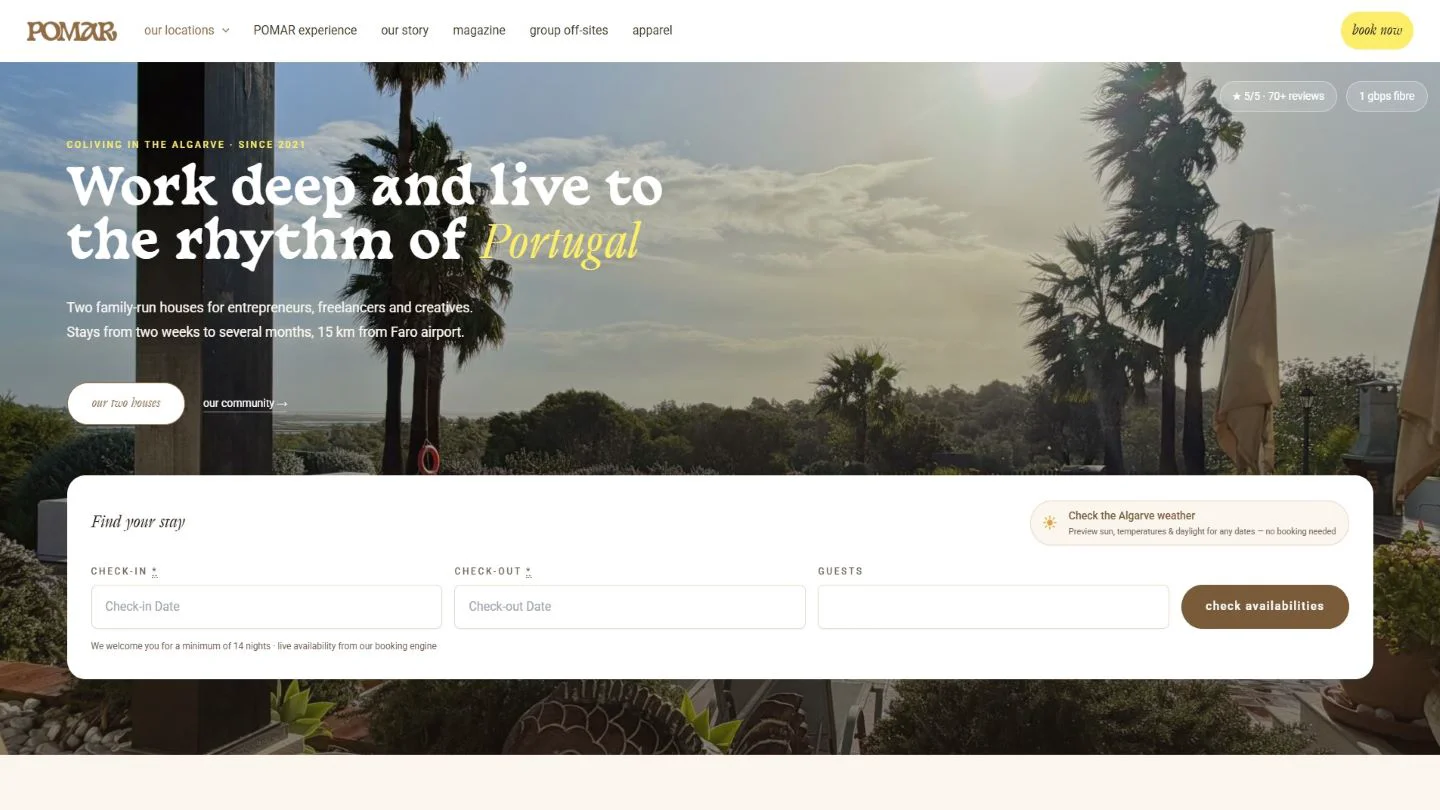
At POMAR, we provide professional coworking areas, high-speed connectivity, ergonomic equipment, on-site hosting, community management, and access to selected wellness and outdoor activities. We can also discuss seminars, offsites, remote team meetings, group arrangements, or house privatization. Explore the Pomar Coliving retreat experience and contact us to discuss your objectives, group, dates, and required support.
Frequently Asked Questions
What is the main purpose of a professional development retreat?
Its main purpose is to create focused time for learning, reflection, peer exchange, and practical professional growth. The retreat should have defined outcomes that participants can apply after returning to work.
How long should a professional development retreat last?
A focused retreat can take place over one day, while deeper learning and reflection may require two or three days. The right duration depends on the objectives, participant availability, travel time, and amount of preparation required.
Who should attend a professional development retreat?
Attendance should reflect the skills, decisions, or professional challenges addressed by the program. Participants may include managers, emerging leaders, educators, researchers, founders, specialists, or colleagues who need to learn and collaborate across roles.
Should a retreat include social or outdoor activities?
Yes, when those activities support connection, reflection, recovery, or the learning objectives. Offer suitable choices rather than assuming that every participant wants the same level of physical activity or social interaction.
Can POMAR host a professional development retreat?
We can discuss professional events, seminars, offsites, remote team meetings, wellness retreats, and partial or complete house privatization. Our Algarve locations also provide private rooms, coworking spaces, connectivity, ergonomic work equipment, on-site hosting, and access to selected local activities, subject to confirmation for your specific group.