Summary: Food-focused coliving combines a shared place to stay with opportunities to cook, eat together, and explore local cuisine. But the label does not guarantee included meals or organized culinary activities. Before booking, check the kitchen and meal arrangements, food options nearby, privacy, work facilities, and the full cost of your stay.
Food is often the easiest way to feel at home somewhere new, but a communal meal is not automatically included in a coliving booking. For an Algarve starting point, our notes on where to work remotely, eat well, and recharge in Sagres show how work routines and local dining can share one trip. Check what is hosted, what you arrange yourself, and what your booking actually includes.
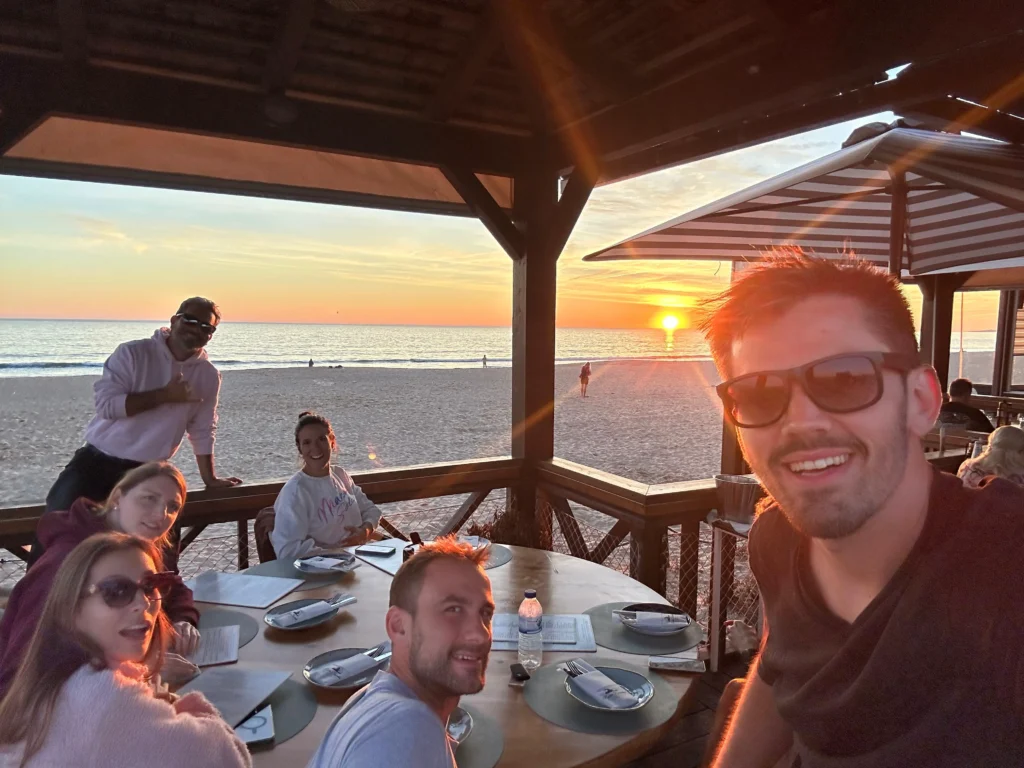
The search phrase “Foodies coliving” usually means food-focused coliving: a shared home base where food, community, or local cuisine is part of daily life. It could mean a shared dinner, a usable kitchen, help finding local markets, or simply good restaurants nearby. These are different experiences, so ask specific questions rather than relying on the label.
What does food-focused coliving actually mean?
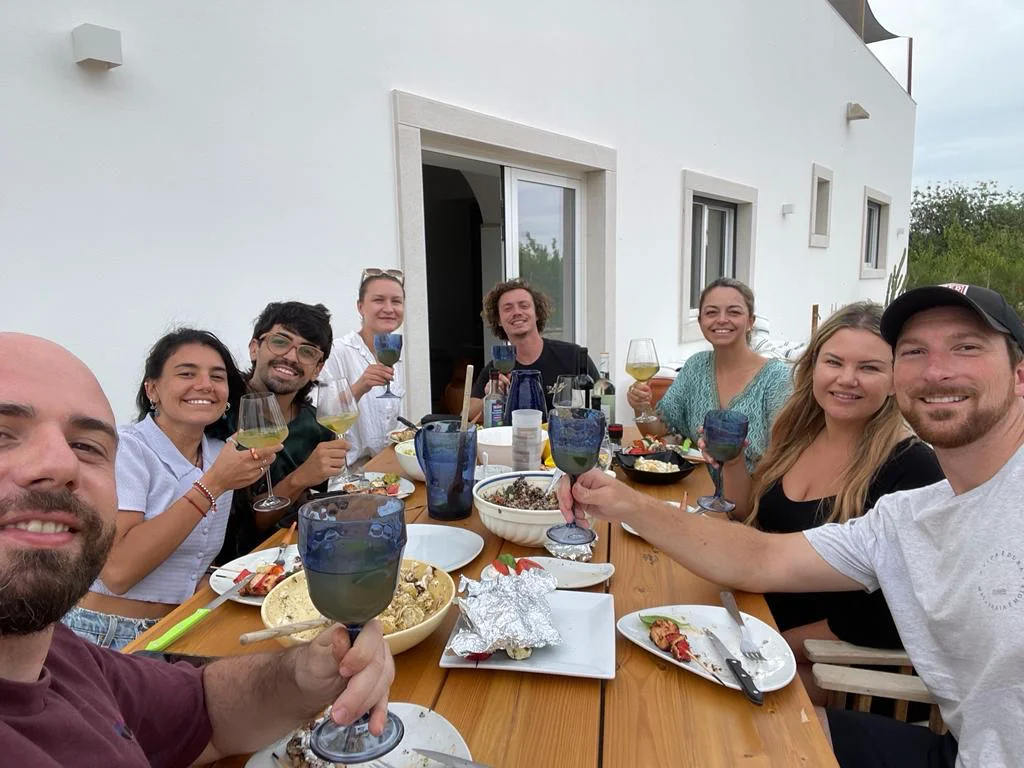
Think of it as a way of living together, not a guaranteed meal plan. Some stays organize communal dinners or cooking activities; others provide shared spaces and leave residents to plan their own meals. A listing may highlight local food while offering no included meals or scheduled culinary events.
Shared meals can be a meaningful part of community life, but do not assume they suit everyone’s schedule or dietary needs. A 2026 study using survey data from 142 countries found an association between sharing meals and higher reported wellbeing in almost all world regions. The study describes a relationship, not proof that communal meals cause better wellbeing. See the 2026 meal-sharing study.
For your decision, separate the promise from the practical details. Ask how often meals happen, whether they are included in the price, and whether you are expected to contribute ingredients or cooking time. If you have allergies or dietary requirements, ask how these are handled before you reserve.
How do you check the food arrangement?
Imagine arriving after a long travel day and needing dinner. You will want to know whether there is food ready, a place to cook, or a nearby shop or restaurant. Confirm the everyday setup directly with the host instead of treating “community” or “local food” as a complete answer.
Use these questions to compare stays:
- Meals: Which meals, if any, are included, and how often are they served?
- Cooking: Is a shared kitchen available, and what cookware, storage, and cleaning arrangements are provided?
- Food needs: Can the host accommodate your dietary requirements, or should you plan independently?
- Community: Are dinners organized by the host, residents, or both, and is participation optional?
- Nearby options: Can you reach shops, markets, cafés, and restaurants on foot or by transport?
These details reveal whether a stay fits your routine. Someone who enjoys spontaneous cooking with housemates may value kitchen access; someone with a packed work schedule may prefer clear meal times or reliable options nearby.
Where does local food fit into the experience?
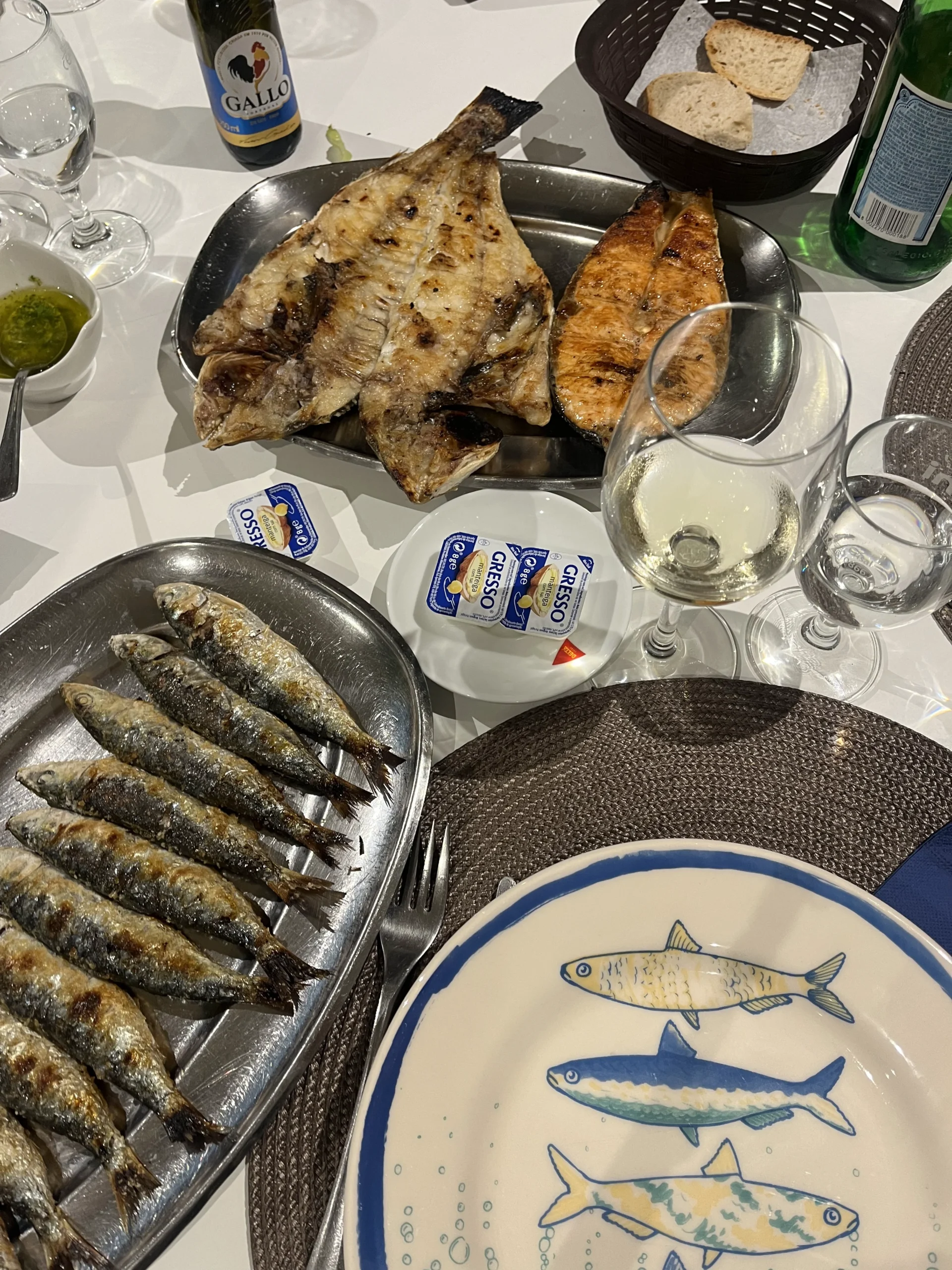
Start with the surroundings, not just the dining room. A neighborhood with a market, grocery shops, cafés, or restaurants gives you ways to experience local food at your own pace. A rural location can offer a quieter stay, but check transport and shop access before assuming food is easy to find.
Portugal-wide tourism figures offer useful context, though they do not describe any one coliving property. Food and drink services accounted for 25.6% of inbound tourism expenditure in Portugal in 2023, according to the country’s tourism expenditure data. For a food-minded stay, use that as context for the wider visitor economy, not as a promise about meals at your accommodation.

If you are staying near Olhão, local guides can help you plan beyond the house. Our article on favorite local spots around Pomar na Serra gives one example of pairing a work routine with time to explore. Check distances and opening hours for the dates of your stay, especially if you will rely on public transport.
Can you eat well and still protect work time?
A remote worker might spend the morning in focused work, shop for ingredients after finishing, and join a shared dinner in the evening. That rhythm works best when the accommodation supports both concentration and community, with private space to recharge and work areas that suit your tasks.
Before booking, confirm the internet arrangement, workspace, room privacy, and any quiet-hour expectations. Then consider whether the location makes your preferred food routine practical. A lively town can make spontaneous dining easier, while a quieter setting may mean planning shopping and transport in advance.
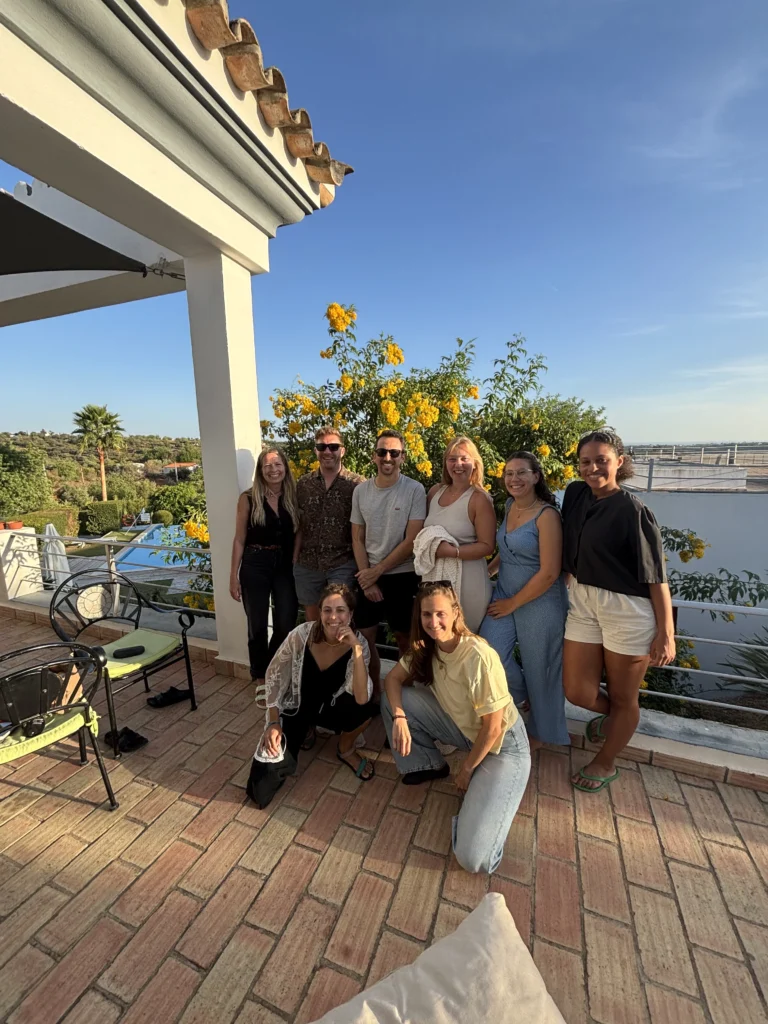
At POMAR, accommodation includes a weekly family dinner, fiber broadband, office equipment, housekeeping, bike rental, and laundry access. POMAR says it has welcomed more than 250 colivers since 2022, and was a finalist in the small-business category of the 2025 Algarve Business Awards. These details offer a sense of the hosted community and work setup, but the weekly dinner is not a full meal plan. Ask about kitchen access, dietary arrangements, and nearby food options for the location you are considering.
How do you compare the full cost?
Build a simple estimate before you book. Add accommodation, groceries, meals out, transport to food shops, and any paid activities. Then check which shared meals or other services are included, and whether extras are optional or need to be arranged separately.
For broad context, Eurostat’s 2025 food-chain publication puts EU household expenditure on food, beverages, and food and beverage serving at €4,290 per person in 2023. That is a general household measure, not a travel budget or a forecast of your spending. Use the Eurostat food-chain figures as context, then calculate your own likely costs using current menus, grocery prices, and transport options.
Compare like with like: a room that includes a regular communal dinner differs from one where you pay for every meal independently. If you cook often, kitchen access and grocery distance matter. If you prefer restaurants, check the local options and transport costs rather than assuming the lowest room price will mean the lowest overall spend.
Choose the stay that matches your food routine
Food-focused coliving can mean anything from an occasional shared dinner to a home base for exploring local cuisine. Ask what is included, check the cooking and dining setup, and make sure the location and workspace fit your everyday needs. A few direct questions before booking will help you choose a stay that feels social without leaving your meals, budget, or workday to guesswork.
Make your Algarve stay work for you
If you want to combine remote work with shared living and time to explore local food, compare the daily routine you want with what each location actually provides. A weekly communal dinner can add a social moment, while nearby food options and kitchen arrangements shape the rest of your meals.
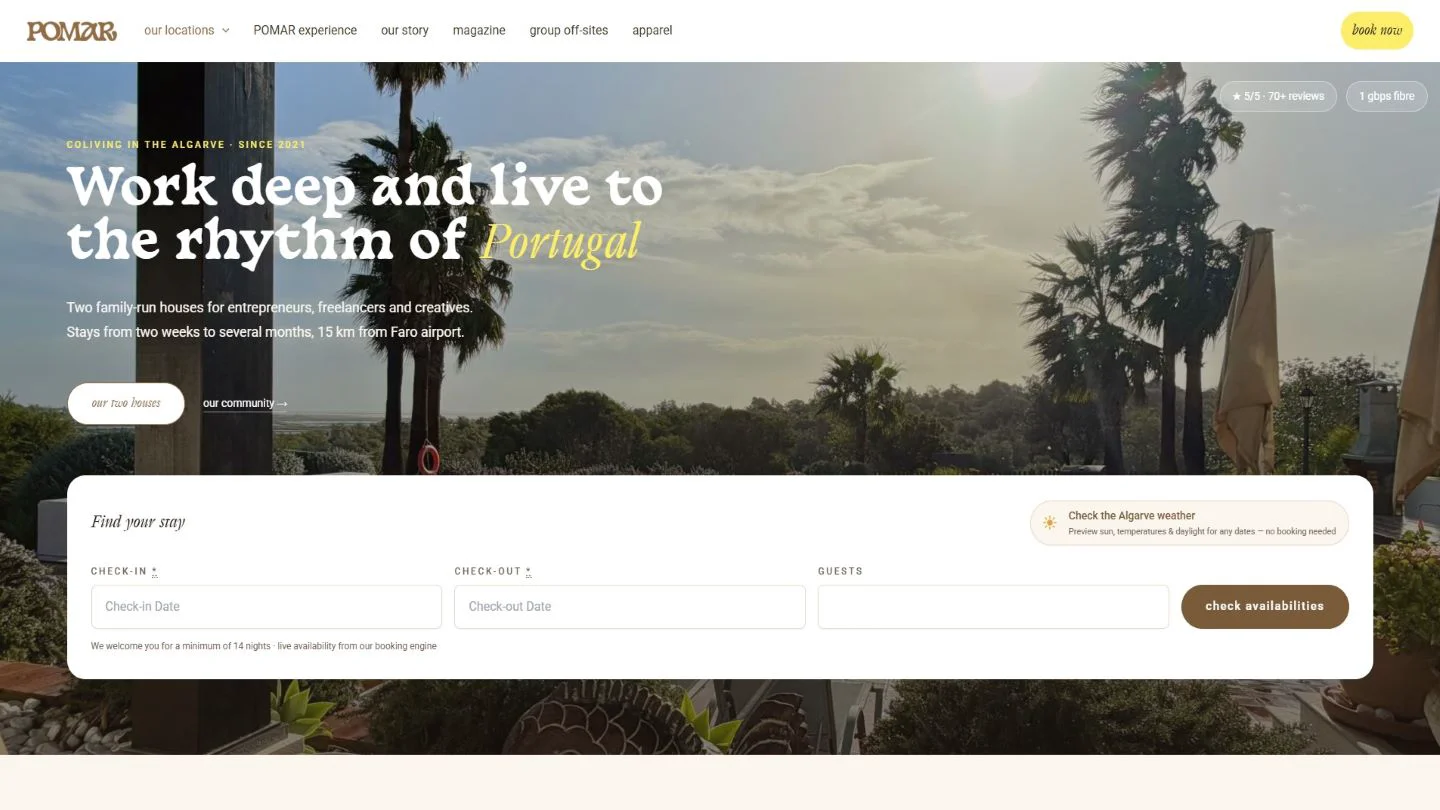
Our Algarve coliving includes private-room accommodation, coworking access, fiber broadband, office equipment, on-site hosts, and a weekly family dinner. The setting and local options differ by location, so check availability and ask us about the details that matter to your stay. Explore coliving in the Algarve to find a work-ready base with community and room to discover the region at your own pace.
Frequently Asked Questions
Does food-focused coliving include meals?
Not necessarily. Confirm which meals are included, how often they are served, and whether groceries or meal contributions cost extra.
Should you choose a stay with a shared kitchen?
A shared kitchen is useful if you like cooking or need control over ingredients. Ask about kitchen access, equipment, food storage, and cleaning expectations before booking.
Can you find food-focused coliving outside Portugal?
Yes, the idea applies wherever a shared home combines community with food-related activities or easy access to local cuisine. Check the specific property’s arrangements rather than assuming the label means the same thing everywhere.
Is POMAR suitable for remote workers interested in local food?
POMAR combines coworking access and work equipment with a weekly family dinner and an Algarve base. Ask about kitchen access and nearby food options at the location that interests you.
What should you ask about dietary requirements?
Tell the host about allergies or dietary needs before you book. Ask whether shared meals can accommodate them and what options you have if they cannot.