

Summary: A coworking and coliving community combines a private or shared home, a professional workspace, and recurring human connection. The model can help remote professionals protect deep work while building routines, friendships, and local ties. Its value depends on more than attractive design: reliable infrastructure, respectful house culture, hosted rituals, and enough privacy must work together.
What if your next work base helped you protect your concentration and meet people without forcing either experience? That is the promise behind a coworking coliving community, where accommodation, work infrastructure, and social connection are intentionally designed together. For a practical introduction to the human side of this model, read our guide to the importance of community in coliving.
The appeal is especially clear for remote professionals who can work from almost anywhere but do not want to live in isolation. A 2025 ethnographic study describes how mobile workers often seek coliving and coworking spaces to manage the tension between geographical freedom and the need for belonging. The strongest spaces therefore treat community as part of the daily experience, not as decoration added after the rooms and desks are ready.
What does a coworking and coliving community actually include?
A coworking and coliving community brings together three connected layers. The first is a place to live, usually a furnished home with private bedrooms and shared kitchens, lounges, gardens, or wellness areas. The second is a place to work, with dependable internet, suitable desks, quiet zones, meeting areas, and space for calls. The third is a social framework that helps residents meet, collaborate, and participate at a comfortable pace.
These layers do not always need to occupy the same room or building. Some communities provide coworking inside the accommodation, while others connect residents with a nearby workspace. What matters is that the transition between living and working is simple enough to support a stable routine.
- Private room: a personal space for rest, calls, and recovery.
- Coworking space: a professional setting with reliable connectivity and ergonomic equipment.
- Shared areas: kitchens, lounges, gardens, or terraces that create natural opportunities for interaction.
- Community rituals: dinners, workshops, talks, exercise sessions, and informal gatherings.
- Local support: guidance with transport, activities, groceries, and nearby places.
This combination distinguishes coliving from a standard short-term rental. It also distinguishes coworking from a desk membership that gives you no support outside working hours. The goal is not constant togetherness. The goal is to make both independence and connection easier to access.
Why does community matter to remote work?
A 2025 ethnographic study of digital nomadism argues that mobility can create social isolation, even when travel appears exciting and liberating. It also raises an important caution: belonging can become a service that is packaged and sold. That does not make community less valuable, but it means you should examine how a space creates connection in practice, rather than trusting social language alone.
For remote professionals, community can support work in several ways. A shared rhythm may encourage you to start and finish at consistent times. Informal conversations can help you solve a practical problem or discover a useful local contact. A dinner or workshop can provide a change of pace after hours of independent screen work.
Community also creates accountability without requiring formal management. When you know the people around you, you are more likely to communicate clearly about calls, quiet periods, shared chores, and personal boundaries. That can reduce the friction that often develops in anonymous accommodation.
However, a healthy community does not require every resident to attend every activity. Some people need solitude, predictable schedules, or uninterrupted concentration. A well-run space offers invitations rather than pressure, and it makes participation possible without making it compulsory.
How do you balance privacy with participation?

Imagine arriving at a new house after a long journey. You want to meet people, but you also need a quiet room, a reliable place for calls, and time to settle into your own routine. The design of the community should support both needs from the first day.
Privacy begins with the accommodation itself. A private bedroom gives you a place to close the door, sleep properly, and separate personal time from shared activities. It does not eliminate connection. Instead, it makes participation more voluntary and comfortable because you can return to your own space whenever you need to recharge.
Participation depends on the quality of the shared environment. A kitchen that is easy to use, a comfortable lounge, and a shaded outdoor area can encourage spontaneous conversations without requiring a scheduled event. Clear expectations about cleaning, noise, guests, and shared resources are equally important.
At POMAR, we approach this balance through private rooms, shared living spaces, hosted activities, and an on-site presence. If you are comparing different options, our guide to finding the best coliving communities can help you assess whether a space matches your preferred rhythm and expectations.
The best fit depends on your personality and purpose. A highly social house may suit someone who wants frequent interaction, while a smaller countryside setting may be better for someone who values calm, focus, and selective participation. Neither format is universally right. The important question is whether the community culture is visible, consistent, and compatible with your boundaries.
What should the work environment make easier?
Reliable work infrastructure is not a luxury for remote professionals. It is the foundation that allows the social side of coliving to remain enjoyable rather than stressful. If your internet fails during a client call or your desk causes discomfort after two hours, the community experience cannot compensate for the operational problem.
Before booking, consider whether the workspace supports your actual working pattern. You may need a quiet desk for focused writing, an enclosed space for confidential conversations, an external monitor for design work, or a standing option for longer sessions. You should also check whether Wi-Fi reaches private rooms and outdoor areas, and whether Ethernet connections are available when stability matters.
At POMAR, we connect accommodation with professional work areas, high-speed fiber broadband, ergonomic chairs, computer screens, standing desks, conference-call space, and backup power at workstations. Our overview of coworking spaces in Faro and the Algarve explains why the work setting should be assessed alongside the destination itself.
The physical separation between work and leisure also matters. If every meal happens beside your laptop, the home can begin to feel like an office. A thoughtful layout gives you options: a focused desk during working hours, shared areas for collaboration, and outdoor or wellness spaces that help you change context.
Good infrastructure should also support different schedules. Some residents work with North American clients, while others follow European or Asian time zones. Quiet rooms, call-friendly areas, and clear house rules help people share one environment without forcing everyone into the same timetable.
How can you evaluate a community before booking?
Five checks can reveal more than a gallery of attractive photographs. Before you commit, assess the following criteria and ask for specific answers rather than general promises.
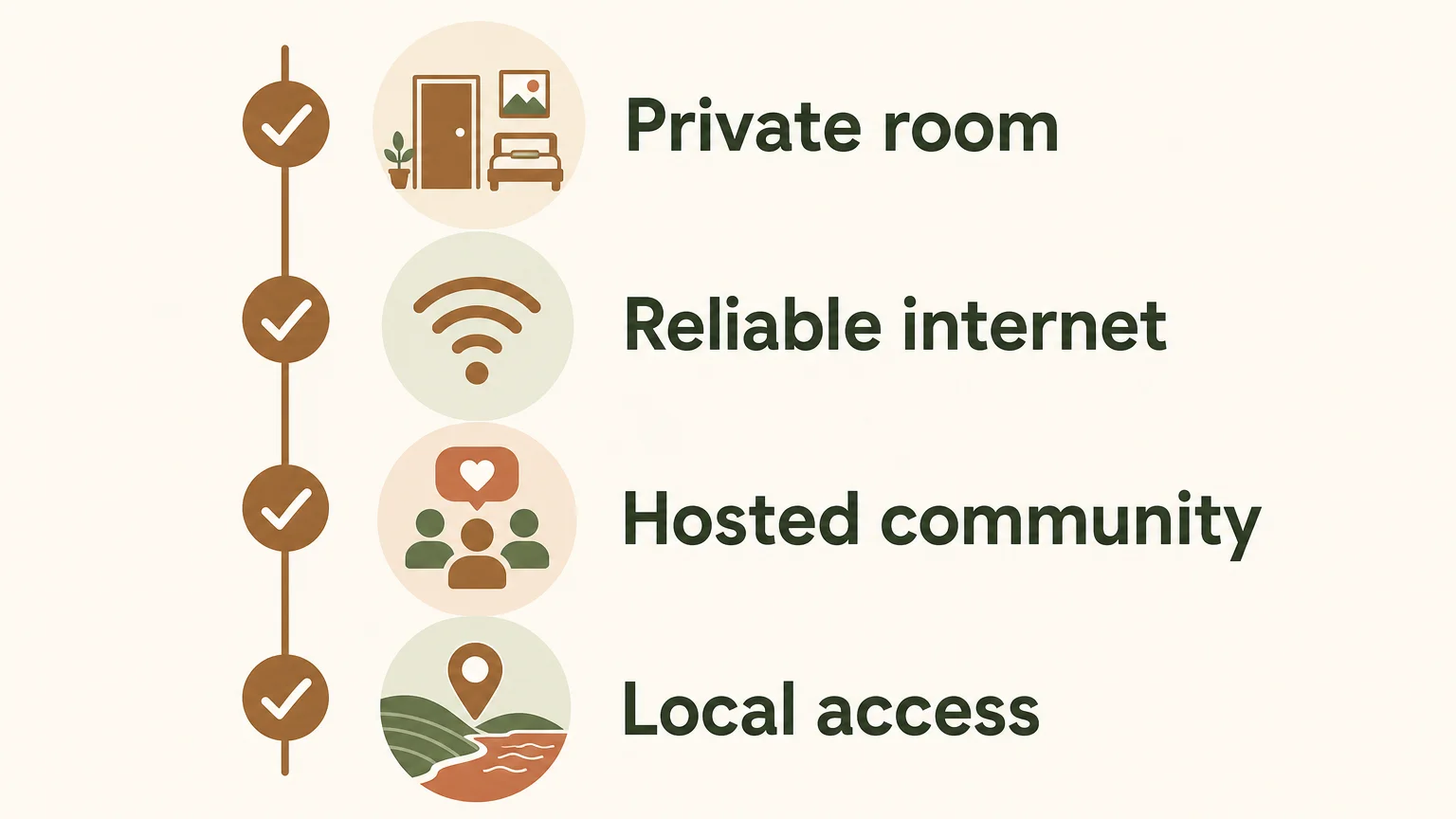
- Privacy and room design: Confirm whether bedrooms are private, whether bathrooms are shared, and how room assignments work. Ask how the space handles requests for changes or quieter accommodation.
- Connectivity and equipment: Look for clear information about broadband, Wi-Fi coverage, Ethernet access, desks, monitors, phone-call areas, and backup options. Vague language about “fast internet” is less useful than concrete specifications.
- Community structure: Check whether activities are regular, optional, and suited to different interests. A weekly dinner can be valuable, but so can workshops, skill-sharing, exercise, and informal time without a fixed programme.
- Hosting and support: Find out whether someone is present on site, how problems are handled, and whether a community manager helps residents settle in. Human availability often makes the difference between a welcoming environment and a house that simply contains several tenants.
- Location and mobility: Consider public transport, supermarkets, restaurants, outdoor activities, and the distance to the nearest town. A beautiful rural location may be ideal for focus, but it may require planning for errands and excursions.
A 2026 Springer chapter examining coliving and coworking arrangements in Japan shows that these communities can differ across several dimensions, including individualism, ecological commitment, spirituality, economic organisation, and social diversity. This is a useful reminder that the word “community” describes many different models. You should identify the values and daily behaviours behind the label.
It is also worth checking practical conditions before arrival. Review minimum stays, payment stages, cancellation rules, access hours, guest policies, children and pet policies, and the availability of optional services. Clear expectations protect both you and the people already living in the house.
Why should local connection be part of the model?
Consider two remote workers with identical desks and internet connections. One spends the month moving between a bedroom and a generic café. The other joins a local run, learns where residents buy food, visits a nearby cultural site, and receives practical guidance from people who know the area. Their work setup may be similar, but their experience of place is completely different.
Local connection helps a coworking and coliving community become more than an international bubble. It can introduce residents to independent businesses, regional food, outdoor activities, and everyday routines that are difficult to discover through a short online search. It also creates opportunities for respectful exchange between visitors and local people.
A Wageningen University thesis on coworking and coliving communities in rural revitalization examined founders, residents, and local participants through interviews, observations, and communal events. Its focus reflects a broader point: the relationship between a community and its surroundings can influence whether the model contributes to local life or remains socially separate from it.
At POMAR, we support this connection through local activity coordination, partner relationships, community dinners, workshops, and access to Algarve experiences. For readers considering longer stays, our guide to coliving for digital nomads explores how temporary living can combine work, discovery, and meaningful connection.
Local integration does not mean filling every day with organised activities. It may be as simple as learning a few useful phrases, shopping at a local market, joining a community recommendation, or asking permission before photographing people and places. The aim is participation with respect, not consumption without context.
Which model fits your working style?
The right format depends on how much structure, privacy, and social contact you want. The following comparison can help you identify which arrangement is closest to your needs.
| Criterion | Short-term rental | Standalone coworking | Integrated model | POMAR coliving |
|---|---|---|---|---|
| Accommodation | Usually private, with limited community structure | Not included | Private rooms with shared living areas | Private-room coliving in shared homes |
| Work setup | Depends on the property | Dedicated desks and work areas | Accommodation connected to coworking | Fiber broadband, ergonomic equipment, call space, and coworking access |
| Community | Usually self-created | Professional interaction during working hours | Shared activities and resident interaction | Hosted dinners, workshops, talks, skill-sharing, and community channels |
| Local support | Varies by host | Usually limited to the workspace | May include destination guidance | On-site hosts and support with activities, rentals, transfers, and local logistics |
| Best suited to | Independent travellers seeking separation | People needing a professional desk | Remote workers seeking an all-in-one routine | Entrepreneurs, freelancers, creatives, digital nomads, and remote workers seeking work and community together |
The integrated model is not automatically better for every person. If you prefer complete anonymity, a private apartment and separate coworking membership may feel more comfortable. If you want a temporary home, dependable work infrastructure, and a ready-made social environment, a hosted coliving model can reduce the effort required to build a routine in a new place.
What are the main trade-offs to consider?
Shared living always involves compromise. You may gain connection, convenience, and flexibility, but you also share kitchens, lounges, schedules, and house expectations. Even with a private bedroom, you cannot control every sound, personality, or change in the social atmosphere.
The destination creates another trade-off. A countryside location can offer calm, nature, and stronger focus, but it may have fewer restaurants, shops, and public transport connections. A beach or city location may provide easier access to activities, but it can also bring more noise, higher demand, or a faster pace.
There are also financial and contractual considerations. Optional activities, transfers, car rental, coaching, and excursions may be priced separately. Cancellation policies can differ according to the location, booking channel, and timing. Read the terms carefully, particularly if your work schedule may change.
Finally, consider whether your expectations are realistic. A community can create opportunities for connection, but it cannot guarantee friendship, professional leads, or constant motivation. You still need to communicate clearly, respect shared spaces, and decide how actively you want to participate.
Choosing a community that supports your whole routine
A successful coworking and coliving experience is built from several practical details that reinforce one another. You need a private place to recover, a dependable workspace to deliver your responsibilities, and a community culture that makes connection possible without pressure. Location, hosting, local access, and transparent terms complete the picture.
When comparing spaces, look beyond photographs and broad promises. Ask how the house works on an ordinary weekday, how residents handle quiet time, who supports the community, and what happens when your plans change. The right choice is the one that fits your working style, social energy, privacy needs, and reason for travelling.
Take action with POMAR coliving
If you want to combine focused remote work with a welcoming temporary home, a hosted coliving environment can make the transition to a new destination easier. The right setting gives you practical support while leaving room for independent routines, local discovery, and genuine community participation.
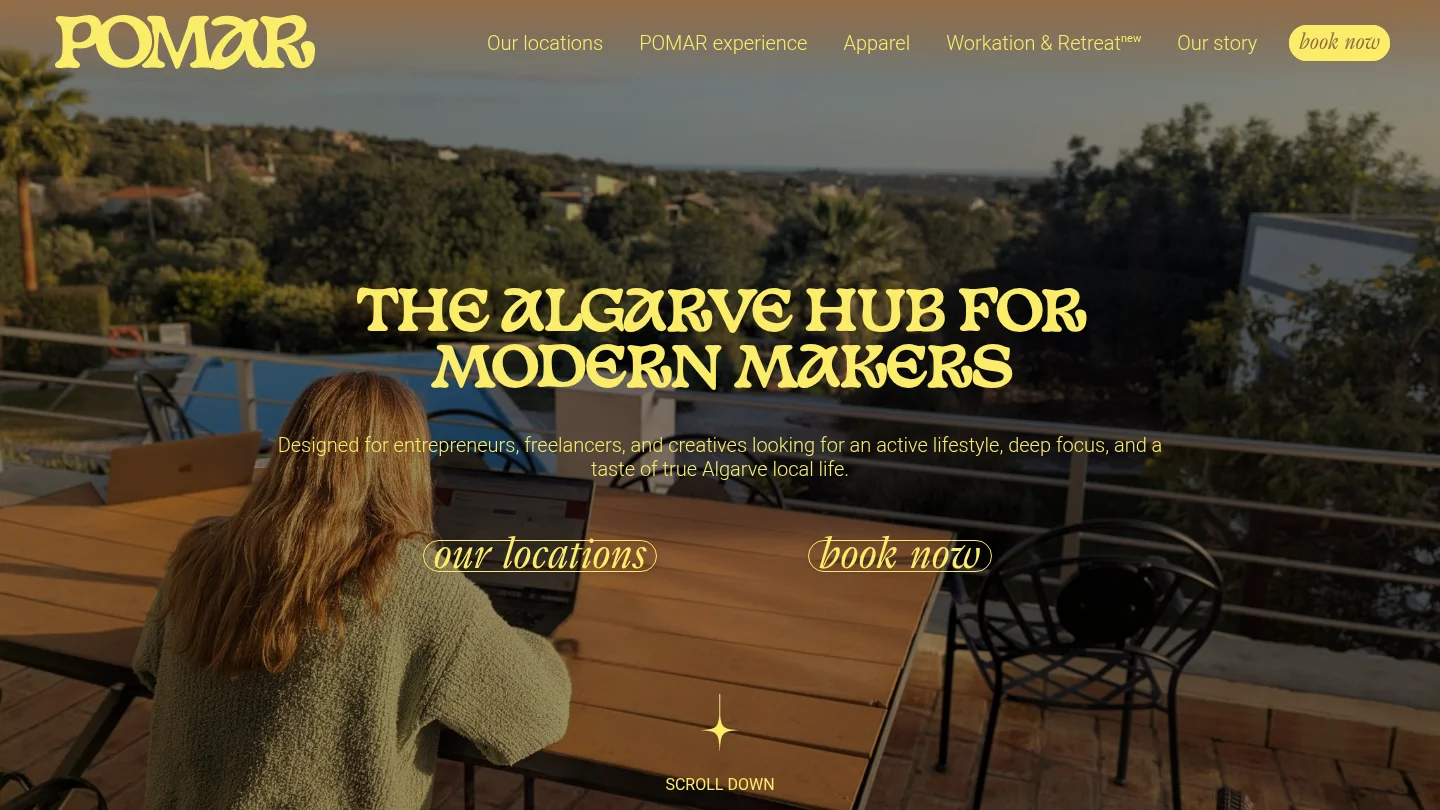
With private bedrooms, shared living areas, professional coworking spaces, high-speed connectivity, on-site hosts, wellness options, community dinners, workshops, and Algarve activities, the POMAR coliving experience brings work and everyday life into one considered setting. Explore the available locations and choose the format that best matches your schedule and priorities.
Frequently Asked Questions
What is a coworking and coliving community?
It is a shared living arrangement that combines private or shared accommodation with access to a professional workspace and a resident community. Activities, house rules, and local support help people connect while maintaining their individual routines.
Is coworking included in every coliving space?
No. Some coliving spaces include dedicated desks and meeting areas, while others only provide basic Wi-Fi or expect residents to work elsewhere. Confirm the equipment, connectivity, call facilities, and access terms before booking.
Can I have privacy in a coliving community?
Yes, many communities provide private bedrooms and shared common areas. Privacy also depends on house size, room layout, noise expectations, and whether residents can choose how often they participate in activities.
How long should I stay in a coworking and coliving space?
The right length depends on your work commitments, travel plans, and desire to settle into the local environment. A longer stay usually gives you more time to develop routines and relationships, while a shorter stay may suit a trial or project-based visit.
Is POMAR suitable for digital nomads and remote workers?
Yes. POMAR is designed for entrepreneurs, freelancers, creatives, digital nomads, and remote workers who want private-room accommodation, professional work areas, hosted community activities, and access to the Algarve. Standard coliving does not accommodate children or pets, while private house arrangements may be discussed for suitable groups.