
Summary: Coliving pairs private rooms with shared workspaces and a built-in community, giving remote workers a productive base and social connection in one place. It answers the isolation and logistics that solo travel creates. In 2026, with tens of millions working while traveling, this model has matured from a niche experiment into a mainstream housing choice.
Roughly 40 million people around the world now earn a living while moving between destinations, and many of them are tired of lonely apartments and unreliable cafés. That is precisely the gap that coliving for remote workers was built to close. If you are weighing your options, it helps to understand how to find the best coliving communities for digital nomads before you book anything.
The lifestyle is no longer fringe. According to MBO Partners, 18.5 million American workers identified as digital nomads in 2025, a 153% jump since 2019, or about 12% of the U.S. workforce. As those numbers climb, the demand for housing that combines focus, flexibility, and human contact grows with them.
What coliving actually means for remote workers
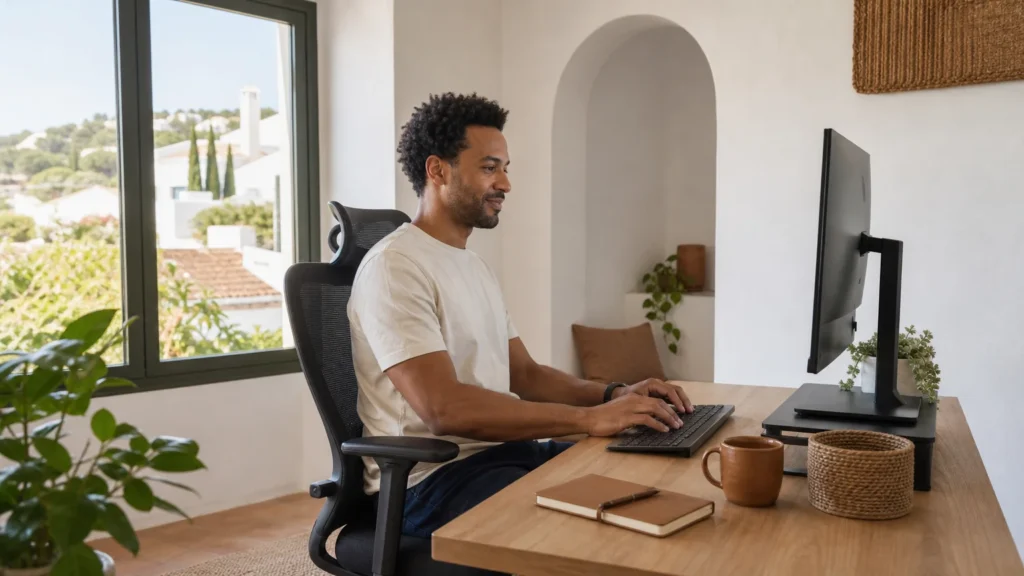
Coliving is a residence where remote professionals rent a private space and share communal areas designed for interaction, recreation, and the exchange of ideas. It borrows from three familiar formats: the social energy of a hostel, the stability of a shared house, and the productivity of a coworking office. The difference is intention. People choose the coliving digital nomad model to live among others who share their professional interests, not simply to split rent.
Most spaces come equipped with high-speed internet, dedicated workstations, and communal areas that double as collaborative offices. Contracts are deliberately light: short or medium stays, no long leases, and none of the deposits and paperwork that traditional rentals demand. For someone who does not know how long they will stay, that flexibility is the whole point.
Why the model fits the nomadic lifestyle so well
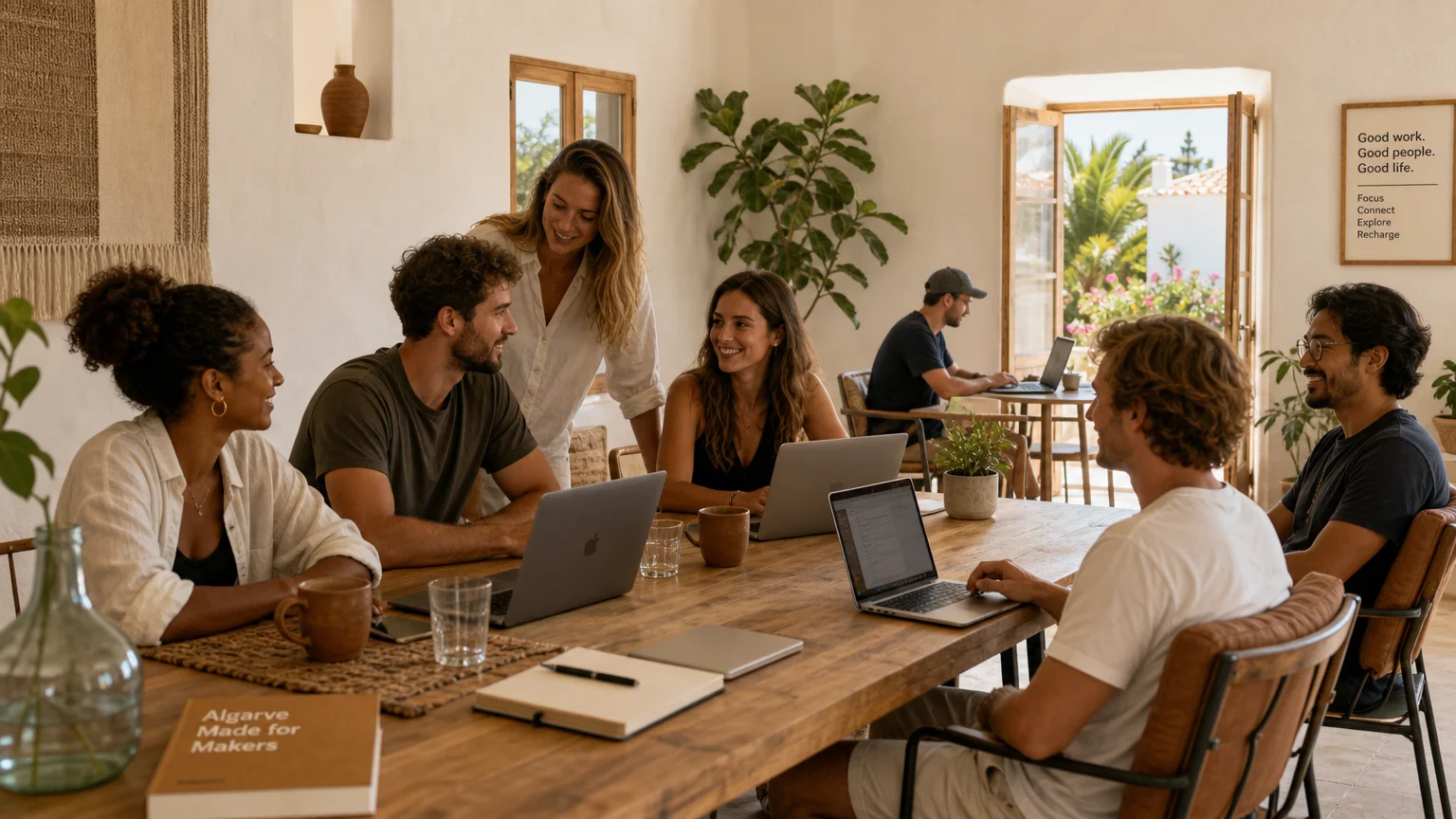
Working alone in front of a screen becomes isolating fast, even in a beautiful destination. A hostel is full of people on holiday, and a rented flat leaves you with nobody to talk to. Coliving solves both problems by surrounding you with people on the same rhythm: they work during the day and socialise afterward. That shared cadence is what makes the difference between simply staying somewhere and belonging somewhere.
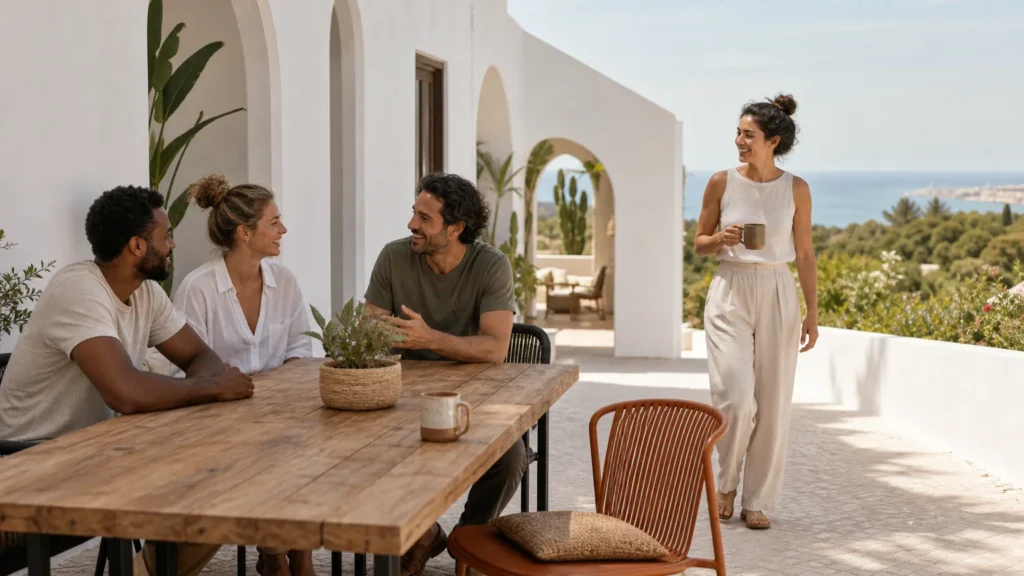
The community aspect is not a marketing slogan; it is the core service. Skill-sharing, networking events, and shared meals turn a booking into a network of collaborators and friends. This matters because loneliness ranks among the most cited struggles of remote work, and a curated community directly counters it. For a deeper look at how these environments reconcile productivity with rest, our take on the workation: slow life is coliving’s answer is worth reading.
The numbers behind a fast-growing movement
This is not a passing trend. The wider services economy built around location-independent work is expanding rapidly. According to a market report, the digital nomad services market was valued at USD 54.49 billion in 2026 and is projected to reach USD 119.81 billion by 2030, a compound annual growth rate of 21.8%. The report attributes much of that growth to the rising popularity of co-living and co-working alongside expanding government nomad-visa programs.
Coliving specifically is riding the same wave. The model has shifted from a niche housing alternative into a recognised residential asset class, driven by remote work, urban affordability pressures, and the appeal of ready-made community. Demand is broadening, too: while most residents remain between 20 and 40, a growing share now includes families, older professionals, and retirees, which is pushing operators to design for a wider range of needs.
Why Portugal and the Algarve keep drawing nomads

Portugal has become one of the clearest success stories in this space. The Iberian Peninsula is expanding quickly, and industry data shows Lisbon alone added 2,400 coliving beds in 2025, with Europe accounting for roughly 48% of global supply. Sunshine, safety, relative affordability, and a strong existing nomad culture combine to make the country a natural landing spot.
Visa policy reinforces the pull. According to the Global Digital Nomad Report, Europe hosts 21 dedicated nomad programs, and Portugal ranks among the top destinations, with visas that can open a path to residency inside the Schengen zone. The Algarve, with its coastline and calmer pace, offers all of this away from the density of the capital. If you want the fuller picture, we explain how coliving in Portugal supports digital nomad culture in detail.
Coliving versus renting: what to weigh
Renting an apartment abroad can look cheaper on paper, but the comparison rarely stays that simple once you add furniture, utilities, internet setup, deposits, and the time spent arranging everything. Coliving bundles those costs and removes the friction, which is often the deciding factor for a stay measured in weeks rather than years. The table below sets out the practical trade-offs.
Criterion | Traditional renting | Coliving with us (POMAR) |
|---|---|---|
Setup and paperwork | Deposit, contract, utilities to arrange | Move-in ready, minimal bureaucracy |
Internet and workspace | You install and equip it yourself | Fiber broadband and office equipment included |
Community | None by default | Weekly family dinner and on-site community manager |
Services | Cleaning and maintenance on you | Housekeeping and bike rental included |
Commitment | Often 6 to 12 months | Flexible 14 or 28-night stays |
The right choice depends on your timeline and how much you value connection. For a longer, structured breakdown of the two options, our guide on coliving vs renting: pros, cons, and differences walks through each scenario.
How to choose a community that fits you
Not every space is built for the same person. Some run as polished, hotel-style chains; others are small, curated houses where you share a kitchen with a handful of people who become your circle. Before booking, look past the photos and check a few non-negotiables: reliable upload speeds, communal areas that people actually use, hosts who care about the experience, and a guest mix that leans toward longer-term residents rather than weekend tourists.
Ask concrete questions. How fast is the internet, really? Is there a dedicated coworking space or just a kitchen table? Who else is staying, and how long do people usually stay? A strong operator will answer clearly and will often have an on-site host who sets the tone for the whole community. Those details separate a good week of work from a frustrating one.
Bringing it all together
The rise of coliving for digital nomads is not a housing gimmick; it is a practical answer to the two hardest parts of working remotely: staying productive and staying connected. As the numbers show, the movement has matured into a lasting part of how people work and travel. Choose your base for the quality of its internet, the strength of its community, and the flexibility of its terms, and let the destination do the rest. Start with a short stay, see how the rhythm suits you, and adjust from there.
Take action with POMAR coliving
If the Algarve sounds like the base you have been looking for, we have built exactly the environment described above: focused work, genuine community, and the calm of southern Portugal. We host entrepreneurs, freelancers, and creative professionals who want to stay productive without giving up connection or good weather.
Our stays include fiber broadband, ergonomic workspaces, housekeeping, bike rental, and a weekly family dinner, with a community manager to make settling in easy. Since 2022, more than 250 colivers have joined us across our Olhao and Fuseta locations. Explore coliving in Algarve for digital nomads and book a stay of 14 or 28 nights.
Frequently Asked Questions
What is the difference between coliving and a shared flat?
A shared flat simply splits rent among people who may have nothing in common. Coliving is intentional: it brings together remote professionals who want community, workspace, and shared activities. The services, events, and curated atmosphere are what set it apart.
Is coliving suitable for a first-time digital nomad?
Yes, it is one of the easiest ways to begin. The logistics of internet, furniture, and cleaning are handled for you, and the built-in community removes the isolation that catches many first-timers off guard. You can focus on your work while finding your feet in a new country.
How long can you stay in a coliving space?
Most spaces are designed for short to medium stays rather than long leases, which is a core advantage of the model. With us, for example, stays are structured around 14 or 28 nights. This flexibility lets you test a destination without a long commitment.
Is coliving more expensive than renting an apartment?
It depends on what you include. A bare apartment can seem cheaper, but once you add utilities, internet, furniture, and cleaning, coliving often becomes competitive for shorter stays. You are also paying for community and convenience, not just a room.
Do I need a visa to work remotely from Portugal?
For longer stays, many nomads use Portugal’s dedicated visa framework, which can open a path toward residency within the Schengen zone. Short visits may fall under standard entry rules, but requirements change, so verify your situation with official sources before travelling.