
Summary: A productive digital nomad routine should be portable, structured, and flexible enough to survive new locations, time zones, and unexpected changes. Protect a few daily anchors, match demanding work to your energy, create clear work boundaries, and review your system regularly so productivity supports your travels rather than competing with them.
A new city can feel energizing until every simple decision becomes a distraction. Where will you work, when will you answer messages, and how will you protect time for rest? A portable routine reduces that friction without turning your travels into a rigid timetable. Our guidance on how coliving can boost productivity also shows why the right environment can make consistency easier.
The most effective routine is not identical every day. It gives your day a reliable shape while leaving room for weather, local culture, client needs, and spontaneous experiences. The following advice combines practical nomad habits with flexible work principles discussed in Nomada’s 2026 guide, so you can build a system that travels well.
1. Build a portable routine around daily anchors
What remains consistent when your address changes? Usually, it is not a particular café, desk, or gym. It is a repeated action that tells your mind what comes next.
Choose two or three portable routine anchors that you can maintain in almost any location. You might take a short walk before opening your laptop, begin work after breakfast, or write tomorrow’s priorities before ending the day. These actions create continuity even when your surroundings are unfamiliar.
Keep the anchors simple enough to survive travel days. A ten minute walk is more useful than an ambitious exercise plan that disappears after one week. A short planning ritual is more sustainable than a detailed schedule that requires perfect conditions.
Think of your routine as a sequence of behaviors rather than a fixed map. You can change the location while preserving the cue, action, and reward. This approach gives you structure without removing the freedom that attracted you to nomadic work.
2. Match demanding work to your energy and time zone
When do you think most clearly? Your answer should shape your workday more than an idealized early morning routine.
Track your energy for several days and note when you are most alert, creative, and resistant to interruptions. Schedule writing, strategy, coding, design, or difficult decisions during that period. Reserve email, administration, research, and routine updates for lower energy windows.
Time zones add another layer. If your clients or colleagues work in another country, define a realistic overlap window instead of remaining available all day. Protect the rest of your schedule for focused work or recovery. This arrangement makes your availability clearer and reduces the pressure to monitor messages continuously.
Flexibility still matters. A beach destination may encourage earlier work during hotter months, while a city with late social hours may suit a later schedule. The goal is not to follow one perfect timetable, but to use energy based planning that reflects your body and professional commitments.
3. Separate your work space from your living space
Can you switch into work mode without changing your location? A dedicated physical cue makes that transition much easier.
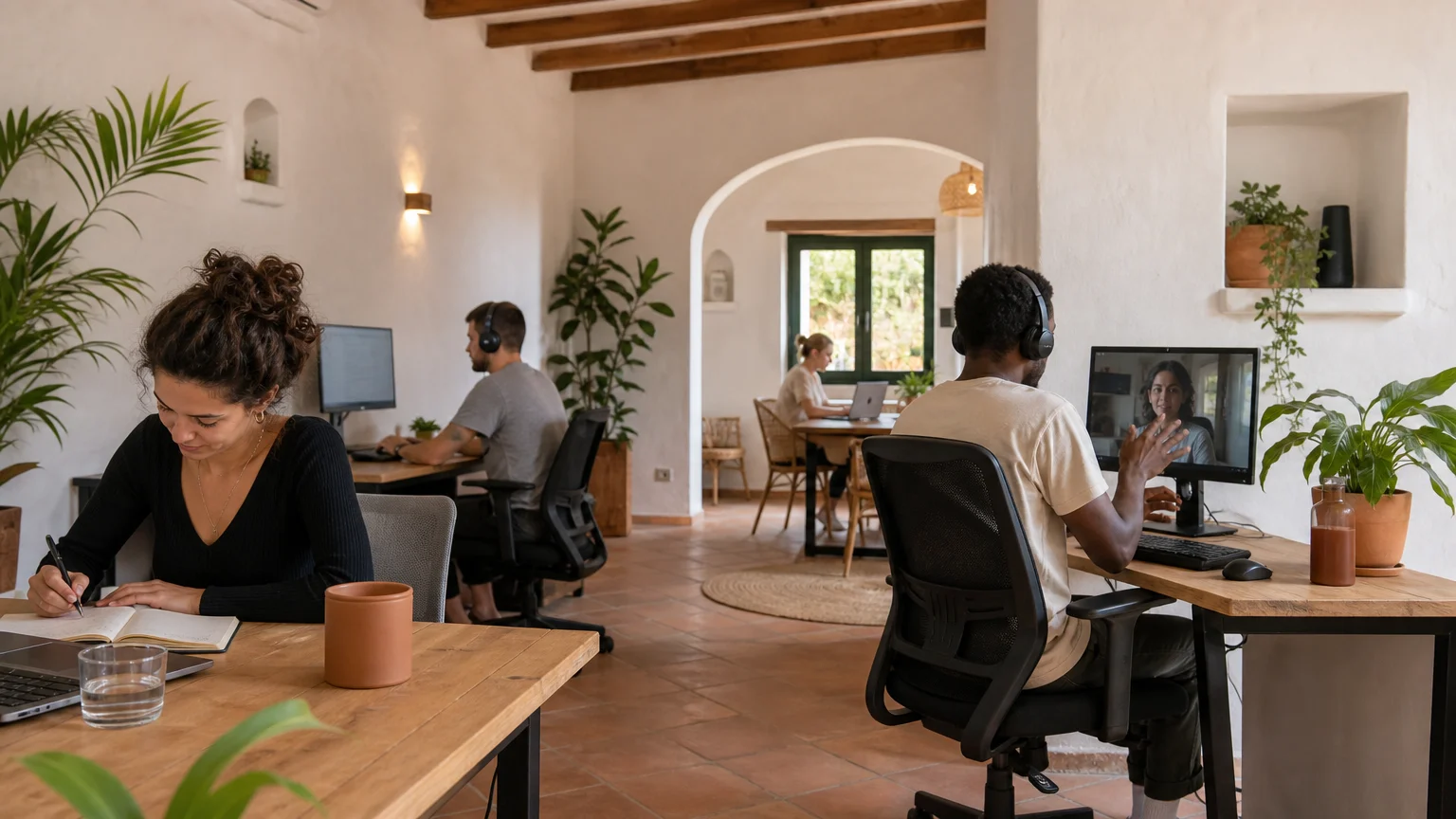
Choose one chair, desk, table, or coworking station for professional tasks. Keep your charger, notebook, headphones, and other work essentials there. When work ends, close the laptop, clear the surface, and physically leave the area if possible.
This boundary is especially important when you live in short term accommodation. Working from bed may feel convenient, but it weakens the distinction between effort and recovery. A separate setup helps your attention settle during work and makes rest feel more complete afterward.
Reliable infrastructure matters as much as visual separation. Look for stable internet, a comfortable chair, suitable lighting, power access, and a place where calls will not disturb others. If you need a more dependable environment, our coworking spaces in Faro and the Algarve explain how a dedicated workplace can support both focus and travel.
4. Plan fewer priorities and protect deep work
What would make today genuinely successful? Answer that question before building a long task list.
Choose one important outcome and two supporting tasks for each workday. This limit creates direction without pretending that travel, communication, and unexpected errands do not exist. Break large projects into visible next actions, such as drafting one section, reviewing one proposal, or completing one client deliverable.
Use a focus method that matches the task. Short intervals can help you begin when motivation is low. Longer blocks may suit writing, analysis, or creative work that requires immersion. During a deep work block, silence notifications, close unrelated tabs, and keep your phone out of reach.
Batch shallow tasks together rather than scattering them across the day. Answer messages at defined times, group administrative work, and avoid switching between personal planning and client work every few minutes. A flexible system still needs protected attention if you want meaningful progress.
For a deeper look at choosing calm environments for concentrated work, explore our recommendations for deep work spots in the Algarve.
5. Create a backup plan for internet, power, and travel
What will you do if your planned workspace stops working? A productive routine includes a second option before a problem appears.
Identify a nearby café, coworking space, library, or accommodation area where you can continue safely. Keep your laptop charged, carry a power bank when practical, and maintain a mobile data option for urgent work. If an important meeting is scheduled, test your connection beforehand and inform colleagues about your location when necessary.
Travel logistics also deserve a place in your calendar. Plan transfers, grocery trips, laundry, and arrival tasks outside your most demanding work period whenever possible. A long journey can consume more attention than expected, so avoid scheduling a complex deliverable immediately after changing cities.
The FasterCapital framework on work routines also emphasizes dedicated working periods and planning around time zone differences. Treat those principles as a starting point, then adapt them to the reliability of your destination and the expectations of your clients.
6. Schedule movement, meals, and social connection
Could your routine remain productive if every day consisted of sitting indoors? Probably not for long.
Schedule movement as part of the workday rather than treating it as an optional reward. A walk before work, a short stretch between focus blocks, or an afternoon swim can mark a useful transition. Regular meals and access to water also protect your concentration when your schedule becomes busy.
Social contact deserves equal attention. Digital nomad life can look highly independent while becoming unexpectedly isolating. Plan a shared meal, coworking session, local class, or conversation with other residents. Community can create accountability and make it easier to disconnect from work at the end of the day.
Protecting your mental balance is not separate from productivity. Our advice on maintaining mental health as a digital nomad can help you recognize when travel, work pressure, and social disconnection are beginning to affect your routine.
7. Use a clear shutdown ritual
When does your workday end? If you cannot answer, work may gradually occupy every quiet moment.
Create a short shutdown ritual that closes professional tasks and prepares you for the next day. Review completed work, identify the next action for unfinished projects, check tomorrow’s meetings, and write down any concern that you do not want to carry into the evening.
Then change your environment. Close the laptop, leave the workspace, take a walk, prepare dinner, or begin another activity that has nothing to do with clients. This ritual gives your mind a clear signal that professional attention is no longer required.
The routine does not need to end at the same minute every day. It needs a recognizable sequence. That distinction is useful for freelancers and entrepreneurs whose workloads vary but who still need dependable recovery.
8. Review and reset your routine every week
What worked in one location may fail in the next. A weekly review prevents small problems from becoming permanent habits.
Ask yourself four questions. Which tasks received your best attention? Where did interruptions come from? Did you have enough time for sleep, movement, and social connection? What should change before next week?
Use the answers to make one or two adjustments. You might move deep work to the morning, reduce meetings, choose a quieter workspace, or add a rest day after travel. Avoid rebuilding your entire system after one difficult day. Sustainable routines improve through small corrections.
A routine can also stop working because it has become too strict. If every delay creates frustration, add buffers between commitments. If every day feels unstructured, restore a few anchors. The useful middle ground is a system that offers flexible consistency, not complete control.
The practical value of routines is not perfection. It is the ability to notice when your work, health, or enjoyment is drifting and respond before the problem grows.
Build structure that leaves room for living
Building a productive routine as a digital nomad means creating dependable cues without copying a fixed office schedule. Protect a few anchors, align demanding work with your energy, choose a reliable workspace, plan for disruptions, and include recovery as deliberately as you include deadlines. Review the system regularly, then adjust it to the place and season you are actually living through. Your routine should make travel more sustainable, not make every day feel like a test of discipline.
Take action with POMAR coliving
A routine becomes easier to maintain when your accommodation supports both concentration and connection. If you want a temporary base where work, rest, and local experiences can coexist, POMAR coliving brings those elements together in the Algarve.
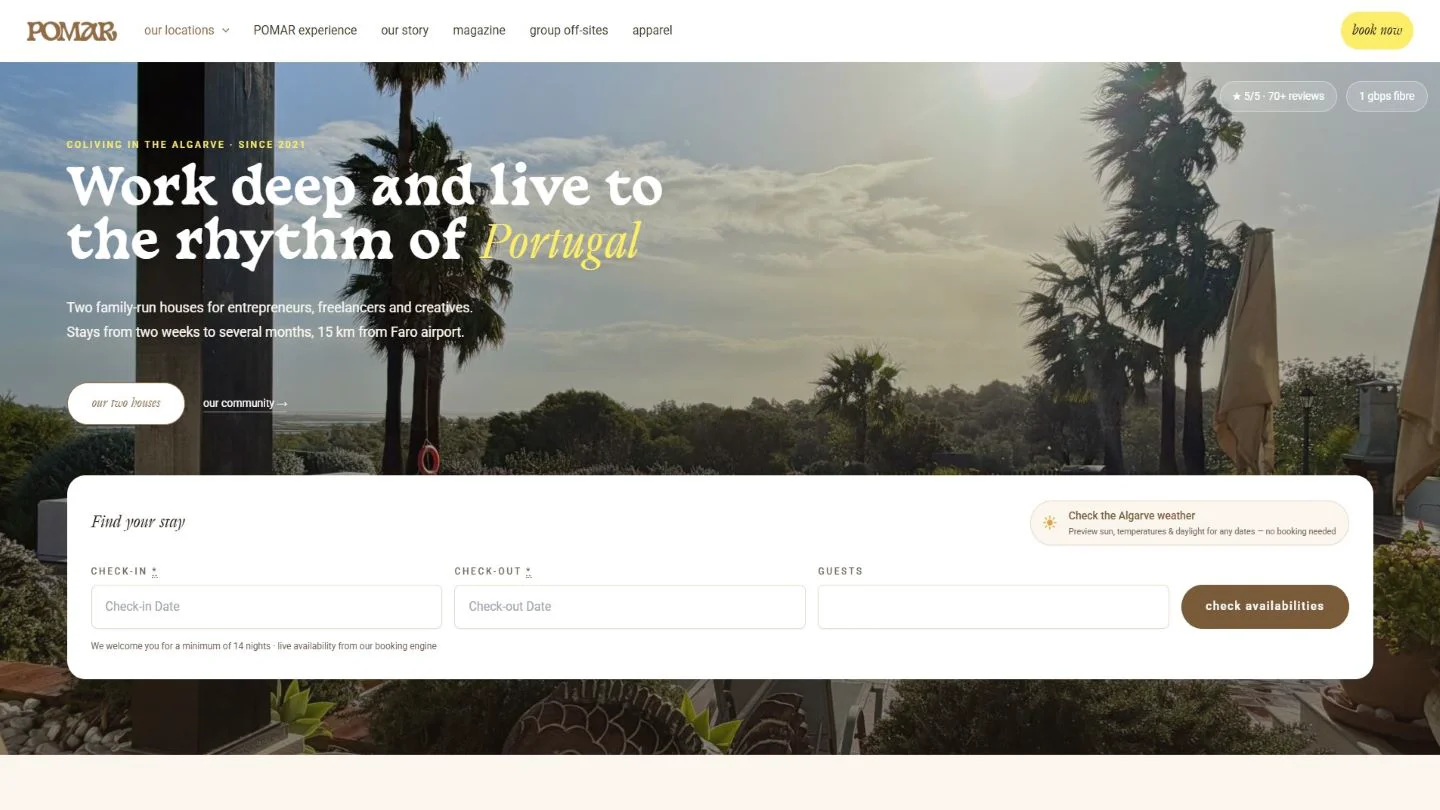
Our private rooms, professional coworking areas, high speed fiber internet, ergonomic equipment, on site hosts, community dinners, and wellness options are designed for entrepreneurs, freelancers, creatives, and remote workers. Explore productive coliving in the Algarve and choose an environment that helps you work with focus while remaining connected to the place around you.
Frequently Asked Questions
How many hours should a digital nomad work each day?
The right number depends on your role, workload, energy, and client commitments. Set a clear work window and define the outcomes that matter most instead of measuring productivity only by hours.
Should digital nomads follow the same routine every day?
Keep a few anchors consistent, but allow the rest of the day to adapt. A portable routine should accommodate travel, weather, local activities, and changes in time zone.
How can I stay productive when moving to a new city?
Give yourself time to learn the area before expecting full productivity. Find your workspace, grocery options, transport connections, and essential services, then rebuild your routine around what you discover.
Is coworking useful for a digital nomad routine?
It can be useful when you need reliable internet, professional equipment, quiet focus, or separation from your accommodation. POMAR also provides coworking access for people who need a structured work environment in the Algarve.
What is the best way to avoid burnout while travelling?
Plan rest, movement, meals, and social connection as part of your routine rather than adding them only after work is complete. Reduce travel frequency when necessary and review your workload whenever sleep, mood, or focus begins to decline.