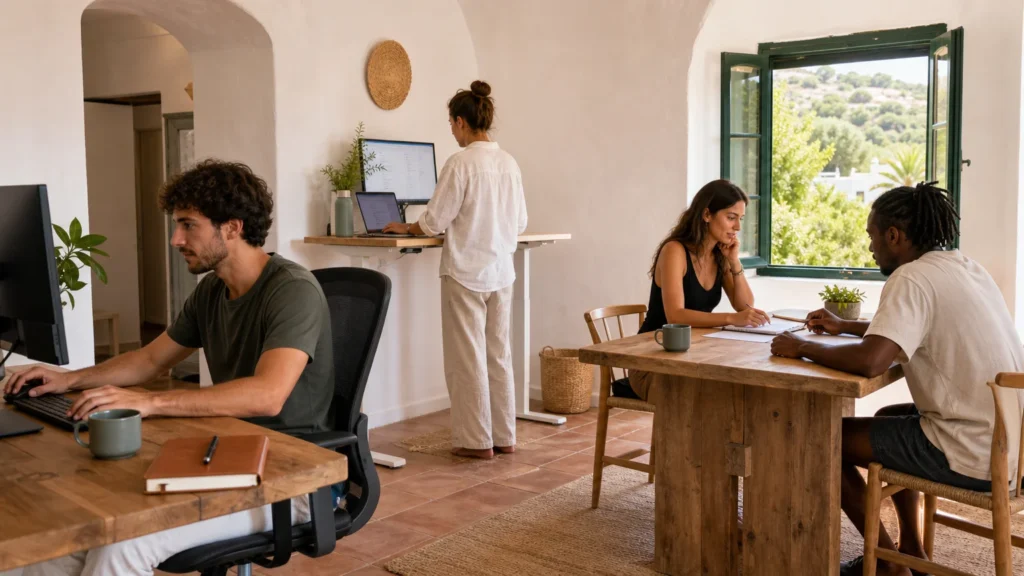
Summary: A workation can support deep work when you choose a practical workspace, protect focused hours, and set clear boundaries around messages and activities. Reliable connectivity and room for privacy matter more than a picturesque view alone. A well-planned routine lets you make progress on demanding tasks while still enjoying the place you came to experience.
What if your most productive workday abroad begins with a closed door, not a beach view? A workation for deep work needs space to concentrate as well as a change of scene. In the Algarve, our guide to deep work and local pleasures in the Algarve shows how focused sessions can fit alongside time outdoors and local discoveries.
A new setting does not guarantee better output; the setup and your work habits still matter. In the United States, 35% of employed people did some or all of their work at home on days they worked in 2025, according to the BLS time-use results. That figure describes where people worked, not how focused they were. For a workation, plan for the work itself first, then choose the surroundings that help you sustain it.
What makes a workation suitable for deep work?
A demanding task needs more than an attractive destination. Think about the practical conditions you would want at home: a comfortable place to sit, dependable internet, enough quiet for calls, and a way to keep interruptions from multiplying.
Start with a specific outcome for each focus block. Drafting a proposal, finishing a design, or outlining a strategy gives the session a clear finish line. Set a start and end time, silence nonessential notifications, and keep only the materials you need open. If your work depends on colleagues, agree on when you will check messages rather than disappearing without notice.
Privacy does not have to mean isolation for the whole trip. A private room can help you reset or work alone, while a shared workspace gives you a separate place to concentrate. Choose a stay that makes both options practical, and decide which one suits each task.
Choose a base that protects concentration
Picture starting a work block without first searching for a table, testing unfamiliar Wi-Fi, or moving away from a noisy crowd. A useful base makes those essentials easier to manage, so you can spend your attention on the work rather than fixing your setup.
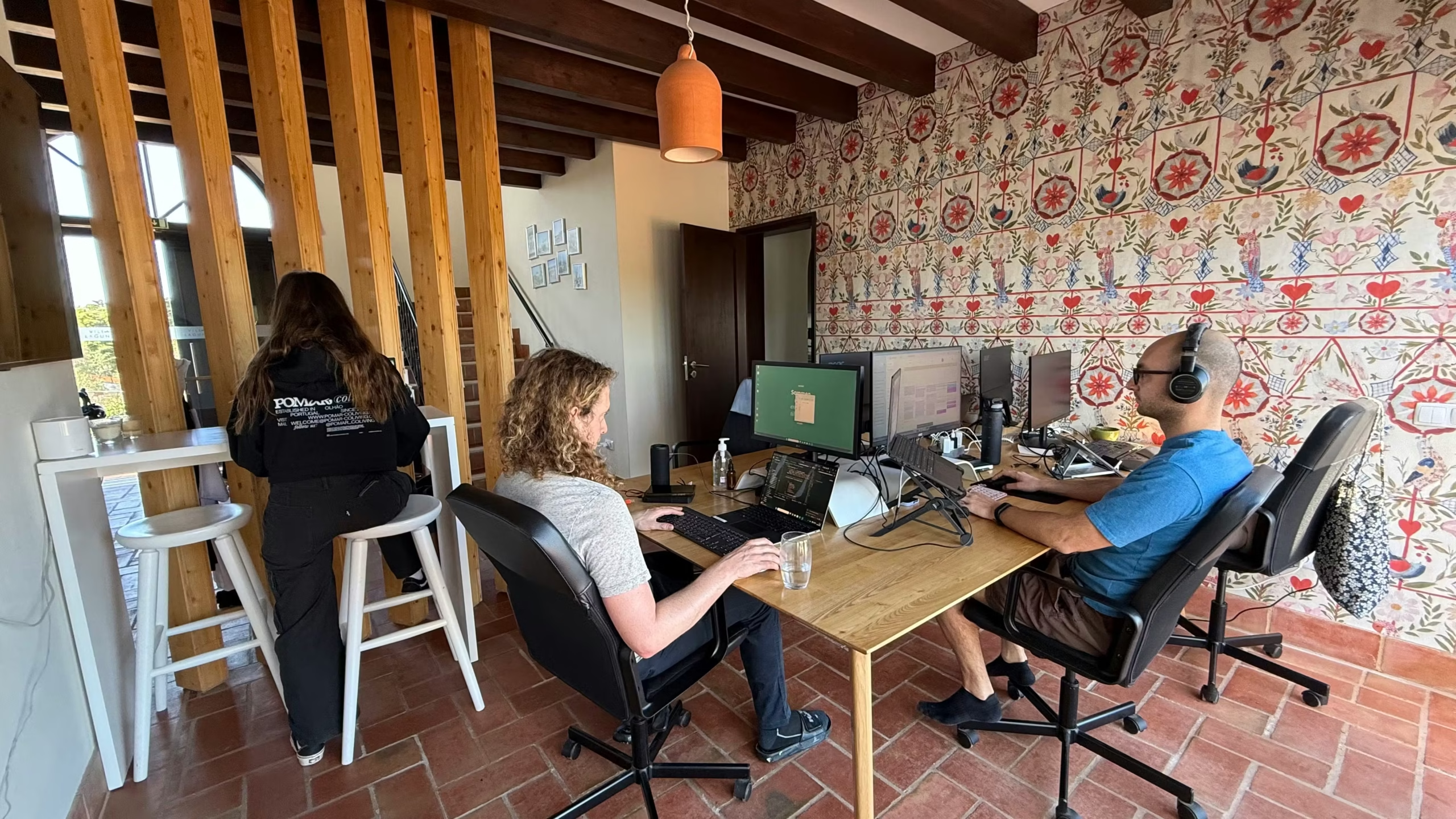
Check for a proper desk or coworking area, seating that supports longer sessions, Wi-Fi in the spaces where you plan to work, and a suitable spot for video calls. Ask whether your room is private, whether communal areas stay busy during working hours, and what backup options exist if the connection drops. To plan your workspace needs, find a coworking space that matches the work you actually do.
We provide private-room accommodation, shared living areas, and professional coworking spaces in our Algarve coliving homes. Our work areas include fiber broadband, Wi-Fi, ergonomic chairs, monitors, standing desks, and ethernet sockets. On-site hosts and a community program give you support and connection without requiring you to work socially all day.
In Gensler’s 2026 survey of full-time workers at organizations with at least 100 employees, respondents spent 26% of their workweek in non-office, non-home places, including coworking spaces and locations used while traveling for business. The survey describes where these workers work, not whether those settings improve focus. It does, however, show that work outside the office and home is already part of some workers’ routines. Gensler’s 2026 survey also covers changes in how people collaborate and use workspaces.
Our site records more than 250 colivers since 2022. That experience matters when you are choosing a place to work and live: practical workspace, private rooms, and hosted community life are part of the same stay, rather than separate logistics to arrange yourself.
Build a daily rhythm around your hardest work
A strong workation day starts with deciding what deserves your best attention. Put the most demanding task into the part of the day when you usually feel clearest. Protect that period in your calendar, then leave routine messages, errands, and planning for a separate window.
Before a session, write down the next concrete step and clear your desk of unrelated materials. During the block, keep notifications off and capture distracting thoughts on paper rather than switching tasks. When the block ends, note where to resume. That small handoff makes it easier to step away without carrying unfinished work into your break.
Then give your free time a place in the schedule. A walk, a meal with housemates, or a local outing can help mark the boundary between work and leisure. Our story about a workation sprint in the Algarve offers one example of bringing a focused project into a different setting.
Protect focus without missing the community
A shared home brings people together, but social connection does not have to compete with concentration. Tell housemates when you are in a focus block, use a consistent signal such as headphones or a closed door, and choose a quieter workspace when you have a call or a difficult task.
Consider the opposite boundary, too: decide when you will stop working. Without a clear finish time, an inspiring destination can become a backdrop for an overlong workday. Schedule local activities or shared meals after your planned work, and give yourself permission to enjoy them without checking messages throughout.
In a 2025 U.S. Census Center for Economic Studies paper drawing on more than 150,000 business survey responses, 7% of businesses said onsite work was more productive, while 2% said work from home was more productive. These are business views, not experimental measures or findings about workations. They are a reminder that remote-work productivity is not a simple matter of changing location. The Census working paper also discusses how businesses and households can be measured in work-from-home surveys.
Community can also provide a gentle end-of-day transition. At POMAR, weekly dinners and shared activities offer ways to connect after work, while private rooms give you space to recharge. One guest’s account describes a month of deep work and connections in southern Portugal.

Check the practical details before you book
Before paying for a stay, check whether the accommodation fits your actual working week. Confirm that the Wi-Fi reaches your room and workspace, ask how calls are handled, and find out whether you can reserve a desk or use coworking facilities. A beautiful common area is not necessarily a quiet place for every task.
Review the room arrangement and house rules, too. A private bedroom may help you protect concentration, while shared kitchens and living spaces can bring more social contact. Look at transport and nearby amenities if you plan to leave the property between work and activities. In rural settings, check your options before assuming public transport will take you everywhere.
Finally, confirm dates, minimum stay, booking and cancellation terms, and any local requirements that apply to your trip. Our beachside location, POMAR na praia, is described as operating from October 2026 through April 2027. Check the current availability and terms for the specific stay you are considering before making plans.
Make focus part of the destination
A successful workation for deep work is built around practical choices: a workspace you can rely on, a realistic daily plan, and clear boundaries for communication and downtime. Set your focus blocks before you travel, then choose accommodation that supports privacy, connectivity, and a change of scene. That balance helps you make meaningful progress without treating the destination as just another office.
Find a focused place to work and stay
If you want a change of setting without piecing together accommodation, workspace, and community separately, consider a hosted coliving stay. Choose a place that gives you options for focused work as well as room to rest and explore.
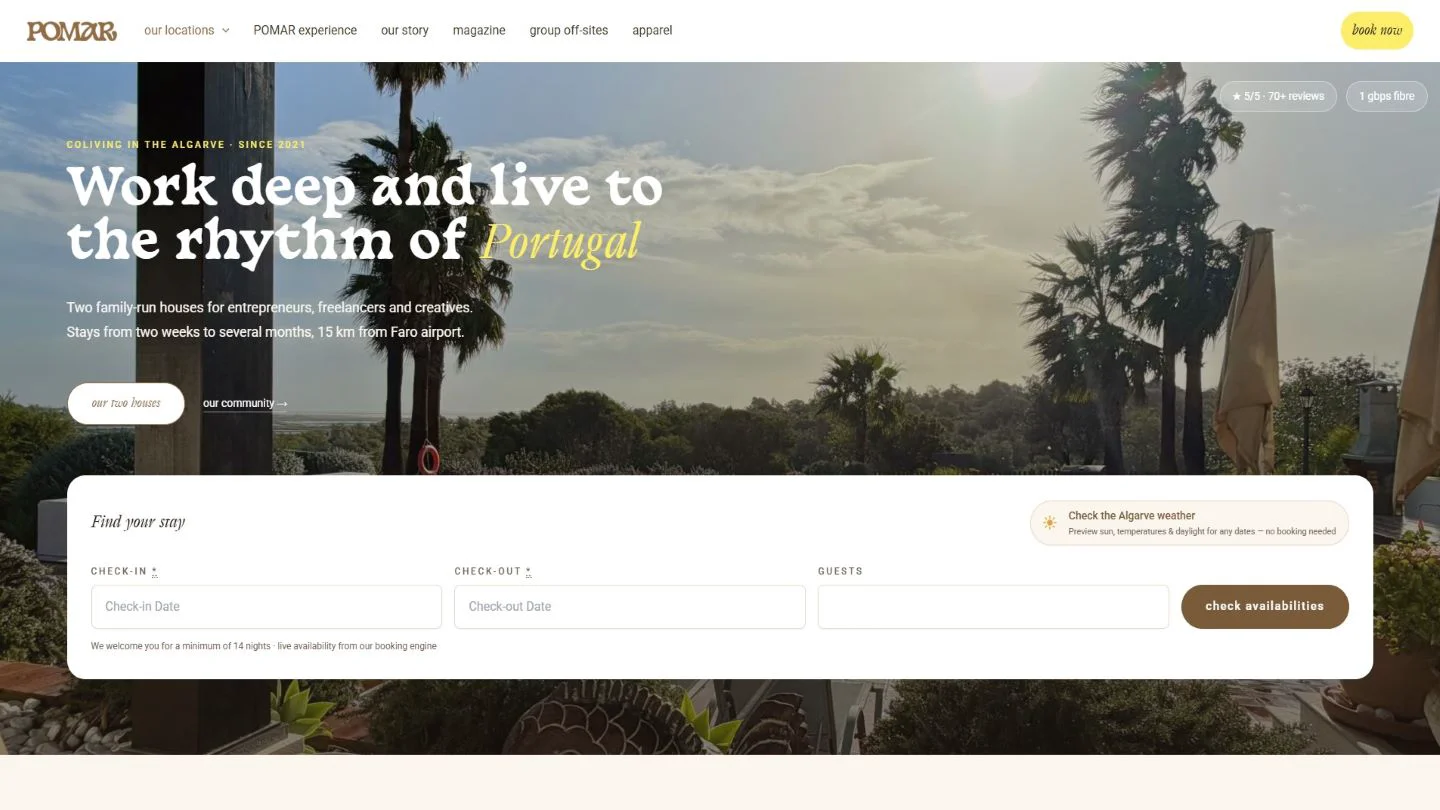
At POMAR, our Algarve homes combine private rooms, shared living spaces, coworking access, fiber broadband, ergonomic equipment, and on-site hosts. Community dinners and locally coordinated activities make it possible to connect after work while keeping your workday your own. Explore coliving in the Algarve and see whether a stay suits your plans.
Frequently Asked Questions
How long should a deep work session be during a workation?
Choose a block that fits the task and your attention, then adjust based on how well you sustain focus. Start with a clear goal and a defined stopping point rather than aiming for an arbitrary number of hours.
Can a shared coliving space support focused work?
It can, if you have access to a suitable workspace and can set boundaries around interruptions. A private room, coworking area, or quiet call space can help you match your environment to the task.
How can I balance work and local activities?
Decide your work hours in advance and place activities outside those protected blocks. A planned finish time makes it easier to enjoy your destination without letting work expand into every evening.
What should I check about internet before booking?
Ask whether Wi-Fi is available in your room and workspace, whether the connection suits video calls, and what happens if it is interrupted. If your work is time-sensitive, ask about backup options before you book.
Can POMAR suit a focused workation in the Algarve?
Our coliving stays combine private-room accommodation with coworking access, fiber broadband, and ergonomic work equipment. You can also join community dinners and activities outside your focused work hours.