

Summary: A coworking space gives you a professional place to work without the cost and responsibility of a traditional office. The right choice depends on your work style, privacy needs, schedule, internet requirements, budget, and interest in community. Compare the practical details before choosing a desk, membership, or hosted work and living environment.
Working from home can be convenient until household distractions, isolation, or an unsuitable desk begin to affect your concentration. A well-designed coworking space offers structure, reliable work infrastructure, and access to other professionals. If you are combining remote work with travel, you may also consider coworking spaces in Faro and the Algarve.
The important question is not simply whether a space looks attractive. You should assess how it supports focused work, calls, meetings, flexibility, comfort, and professional connection. The most suitable workspace is the one that fits your actual working day, not only your preferred aesthetic.
What is a coworking space?
A coworking space is a shared professional environment used by people from different companies, industries, or professional backgrounds. Members may work independently at open desks, reserve dedicated workstations, use private offices, or book meeting rooms for specific tasks.
Unlike a traditional office, a coworking space does not usually belong to one employer. Unlike a coffee shop, it is designed around work, with business internet, suitable furniture, meeting facilities, and defined membership or day-use arrangements. Some spaces also provide reception support, printing, kitchens, events, wellness facilities, or business services.
The model has become more varied over time. In the United States, the Q2 2026 report counted 9,384 coworking locations and 166.36 million square feet of listed coworking space. The report also found that smaller markets were contributing to recent growth, which means professional shared workspaces are no longer limited to the largest business districts.
This variety creates useful choice, but it also requires careful comparison. A quiet independent desk, a community-focused hub, and a private team office can all be described as coworking, even though they support very different routines.
Which coworking format fits your work?
Start by identifying how much consistency, interaction, and privacy you need. The main formats usually serve different working patterns.
| Format | Suitable for | Main advantage | Possible limitation |
|---|---|---|---|
| Open desk or hot desk | Occasional users, freelancers, and remote employees | Flexible access without a permanently assigned seat | Less consistency and limited privacy |
| Dedicated desk | Professionals who work regularly from one location | A stable workstation with shared amenities | Higher cost than occasional access |
| Private office | Small teams and confidential work | Greater privacy for calls, documents, and collaboration | Less spontaneous interaction with the wider community |
| Hybrid coworking environment | People who alternate between focus, collaboration, and meetings | Access to several work settings in one place | Popular rooms or quiet areas may require booking |
| Hosted coworking and coliving | Remote workers, digital nomads, and workation guests | Work infrastructure combined with temporary accommodation and community | Location, stay length, and house rules may limit suitability |
An open desk can be sufficient if you need a professional setting once or twice a week. A dedicated desk may be more useful when you want a consistent routine. A private office becomes important when confidentiality, team coordination, or frequent client meetings are central to your work.
Hosted coworking and coliving adds another dimension. You are not only renting access to a desk. You are choosing a temporary environment that combines accommodation, work facilities, local support, and social contact. This can suit professionals who want to work productively while experiencing a new place.
What should you inspect before joining?
Imagine arriving for an important video call and discovering that the open area is noisy, the meeting rooms are occupied, and the internet slows down at peak hours. A site visit can help you identify these practical issues before they affect your work.
First, check the location and daily journey. Consider public transport, parking, walking routes, nearby food options, and the distance from clients or accommodation. A beautiful workspace becomes less useful if reaching it adds significant stress every day.
Next, ask how access works. Some spaces accept drop-in visitors, while others require advance booking. Confirm opening hours, entry procedures, guest rules, and whether day passes include all common areas or only selected zones.
Privacy also deserves direct attention. Ask whether the space has private rooms, conference facilities, phone areas, secure storage, and clear rules for confidential conversations. If your work involves client data, financial information, or sensitive projects, an attractive open-plan room may not be enough.
Meeting availability is especially important for consultants, distributed teams, and client-facing professionals. Our guide to a remote team meeting venue in the Algarve explains why location, equipment, privacy, and local support matter when a workspace must serve more than individual desk work.
Why infrastructure matters more than decoration

A coworking space should remove friction from your workday. Reliable connectivity, comfortable seating, suitable screens, power access, and a quiet place for calls often matter more than decorative features.
Check whether the space provides stable internet throughout the building, including meeting rooms and outdoor areas if you expect to move between locations. Ask whether wired connections, backup power, technical support, and conference-call facilities are available.
Ergonomics also affects the value of membership. Adjustable chairs, standing desks, suitable desk height, external monitors, and natural light can support longer work sessions more comfortably. These details are particularly important if you plan to use the space several days each week.
Usage patterns matter as well. A June 2026 analysis compared resource use, bookings, workspace sizes, and pricing patterns across flexible workspaces from 2016 to 2026. The practical lesson is clear: evaluate how you will use the facilities, not only what the space lists as available.
At POMAR, we combine professional coworking areas with fiber connectivity, Wi-Fi coverage, ethernet sockets, ergonomic chairs, monitors, standing desks, backup power, and conference-call space. Our coworking and coliving model is designed for people who need a temporary base for both focused work and everyday living.
How does community change the value?
A desk can solve a practical problem, but community can influence whether you continue using a space. Shared work environments create opportunities for informal conversations, skill-sharing, introductions, and collaborations that are difficult to reproduce at home.
Community should not mean constant social pressure. A suitable space allows you to participate when you want connection and withdraw when you need concentration. Look for a balance between quiet work areas, shared kitchens or lounges, organised events, and respectful house or workspace norms.
Events are most useful when they support genuine interaction rather than forced networking. Workshops, talks, shared meals, brainstorming sessions, and outdoor activities can help people connect naturally. The quality of hosting matters because clear communication and thoughtful introductions can make a new environment easier to navigate.
Our coworking and coliving community brings work, shared living, and local experiences into one hosted environment. We organise community activities around the interests of our guests, while preserving space for independent routines and deep-focus work.
Our experience includes more than 250 colivers since 2022, a business-reported figure that reflects the type of community we have built over time. For a reader choosing a space, the relevant question is whether the team can support both connection and personal boundaries.
Is a coworking space worth the cost?
Consider a remote professional who works from home four days a week but needs reliable calls, a professional meeting room, and stronger separation between work and personal life. A flexible membership may be worthwhile if it replaces several separate costs and reduces daily friction.
Compare the complete price, not only the advertised desk fee. Include internet, furniture, electricity, cleaning, meeting room charges, printing, transport, parking, refreshments, and any registration or access fees. Also check whether the plan is monthly, pay-as-you-go, or tied to a longer commitment.
Day passes are useful when you are testing a location or only need a workspace occasionally. Monthly memberships can make more sense when you need a regular routine. A private office may justify its additional cost when privacy, team coordination, or client confidence are important.
The wider office market also shows why flexibility has become relevant. Axios reporting on United States data from the first quarter of 2026 described office vacancy reaching 21% across 79 markets, while workers spent more time away from traditional offices than before 2020. This does not make coworking automatically affordable, but it helps explain why many professionals now compare flexible workspace with both home working and conventional offices.
At POMAR, coworking day access starts from €15 per day, with decreasing subscription prices. Day users must reserve in advance, and access depends on capacity, with up to 8 residents and up to 12 people during the day. This format can suit professionals who want a focused workspace without booking overnight accommodation.
How can you choose and test the right space?
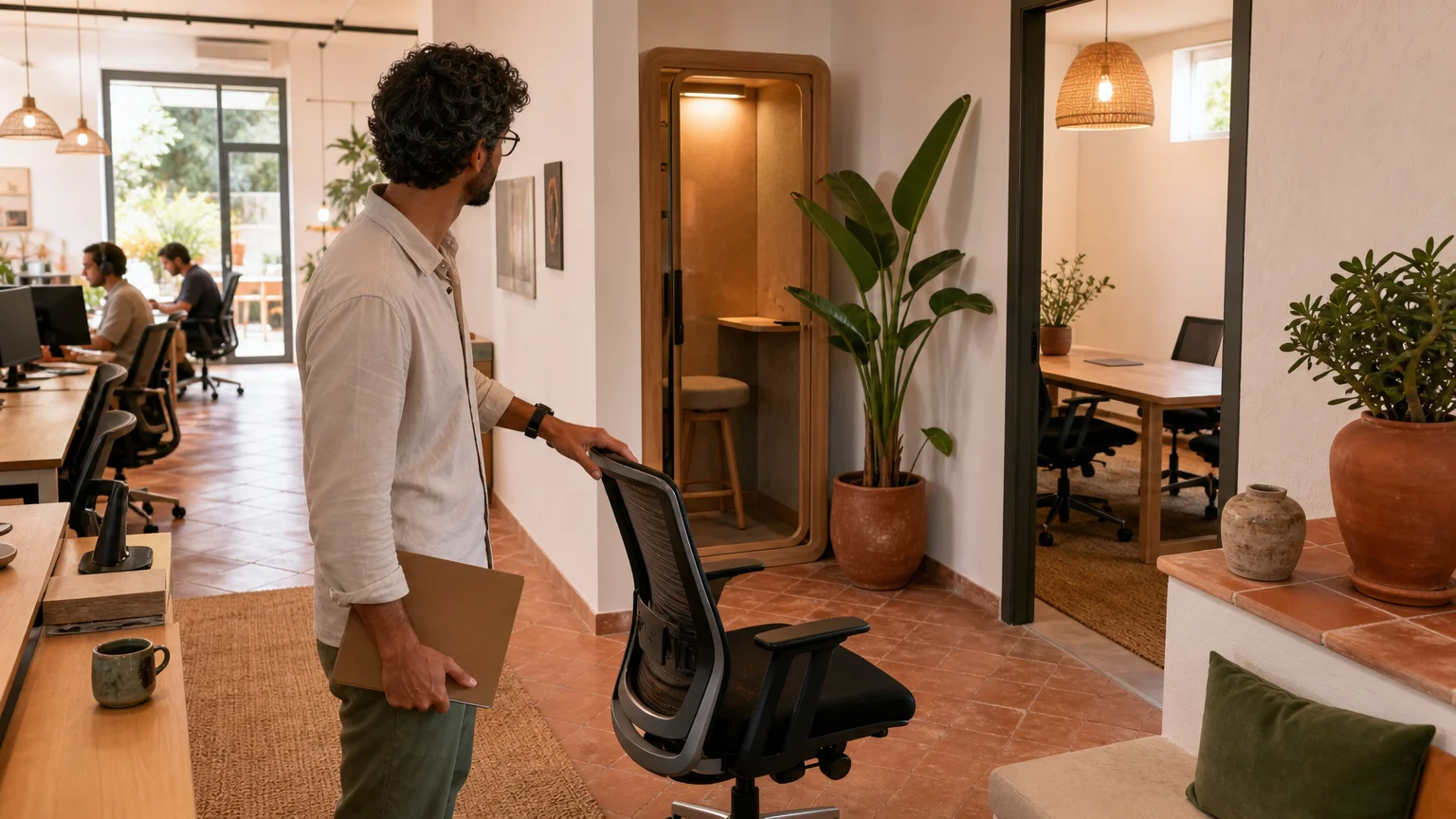
Before joining, write down the tasks you expect to complete there. Then test the space against those tasks rather than judging it by atmosphere alone.
- Work pattern: Decide whether you need occasional access, a regular desk, a private office, or a work and accommodation package.
- Connectivity: Ask about internet reliability, wired access, backup systems, and support when problems occur.
- Privacy: Check call areas, meeting rooms, screen visibility, document security, and guest access.
- Comfort: Evaluate chairs, desk height, lighting, temperature, noise, and the availability of quiet zones.
- Booking rules: Confirm whether desks, rooms, and day passes require advance reservations.
- Community: Learn how events work and whether participation is optional or central to the experience.
- Terms: Review membership duration, cancellation conditions, payment dates, deposits, and extra charges.
- Location: Consider transport, nearby services, local amenities, and the time required to reach the space.
If possible, visit during the hours when you expect to work. A quiet morning may feel very different from a busy afternoon. Observe noise levels, room availability, desk spacing, and how members interact with one another.
For teams, ask whether the space can support growth, workshops, retreats, or temporary offsites. For individuals, ask whether you can maintain focus without feeling isolated. A short trial or day pass can reveal more than photographs or a list of amenities.
Choose the workspace that supports your real routine
The right coworking space should make your work easier, more focused, and more sustainable. Compare the practical details first, including connectivity, privacy, access, comfort, location, and terms. Then consider the less visible value, such as hosting, community, local support, and the ability to adapt as your needs change. A thoughtful visit and a realistic test day can help you choose with confidence.
Find a Coworking Base That Fits Your Work
If you want more than an occasional desk, consider a hosted environment that combines professional work infrastructure with temporary living and meaningful local connection. The right setting can help you maintain concentration while giving you room to explore, recover, and meet other independent professionals.
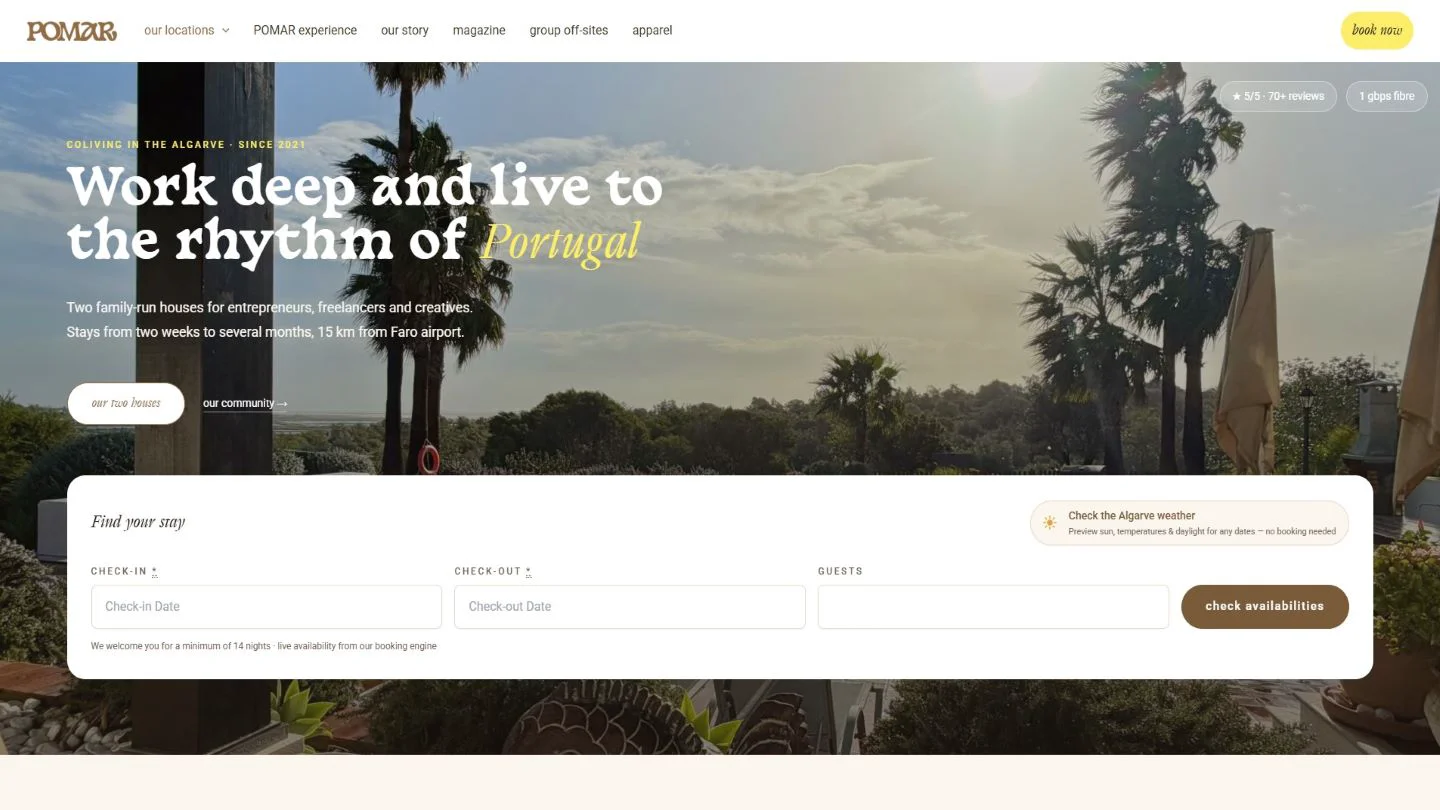
At Pomar Coliving, we welcome remote workers, entrepreneurs, freelancers, creatives, and digital nomads at our Algarve locations. Our offer combines private rooms, shared living areas, coworking access, reliable connectivity, ergonomic equipment, on-site hosting, community activities, and optional local experiences. Day access is also available from €15, subject to advance booking and capacity.
Frequently Asked Questions
What is the main purpose of a coworking space?
A coworking space provides a professional place where people from different companies can work independently or collaborate. It usually combines shared desks with business internet, common facilities, meeting areas, and flexible access options.
Is a coworking space suitable for remote employees?
Yes. Remote employees can use coworking to create a clearer work routine, reduce isolation, access professional facilities, and meet colleagues or clients outside the home. The best choice depends on privacy, employer requirements, and the frequency of use.
What is the difference between a hot desk and a dedicated desk?
A hot desk is an available workstation that may change each time you visit. A dedicated desk is reserved for you, giving you greater consistency while retaining access to shared facilities.
Can I use coworking without booking accommodation?
Many spaces offer day passes or memberships for people who do not stay overnight. At POMAR, coworking day access is available for day users, but advance booking is required and capacity limits apply.
What should I check before joining a coworking space?
Check internet reliability, privacy, noise, meeting room access, opening hours, location, booking rules, and the complete cost. You should also review cancellation terms and visit during your expected working hours whenever possible.
