Summary: A winter workation works best when your destination suits the season and your accommodation supports a normal working day. Compare climate, internet, quiet space, time zones, transport and total stay costs before booking. For a Portugal base, the Algarve offers a coastal option, while POMAR’s winter operating period and work facilities give you concrete details to check.
Would a change of season feel like a real break if your workday still runs smoothly? A winter workation lets you keep your usual responsibilities while spending time somewhere that suits your preferred winter, from a mild coastal setting to a colder city. If Portugal is on your shortlist, explore winter coliving in Portugal as one way to pair a temporary stay with a place to work.
Start with the practicalities, not the postcard. Your employer’s location rules, meeting hours, accommodation, internet and local transport all affect whether a destination fits. Then plan for free time you will genuinely have, rather than expecting to turn every evening into a holiday. A clear routine makes it easier to enjoy the change of scene without letting work take over.
What does a winter workation need to work?
Imagine arriving on Sunday and joining a Monday morning call from your accommodation. The trip is only workable if you have a quiet place to speak, dependable internet and a plan for any time difference. Before booking, confirm your employer permits work from that location and check whether your role has specific security or equipment requirements.
A 2025 mixed-methods study examined what workationers seek from combining work and travel, including the rewards they expect from the experience. Its survey included 900 completed responses. That is a useful reminder that a workation needs to serve both sides of the arrangement: protect your working hours, then make your non-work time count. You can read the 2025 workation study for its research on these motivations.
Set a simple baseline before you compare places: identify your fixed meeting hours, the tasks that need concentration and the number of hours you want to spend outdoors. This creates a practical test for each accommodation. If you cannot picture a normal workday there, keep looking.
Choose the kind of winter you actually want
A mild coastal break and a snowy city trip offer very different days outside work. Decide whether you want more daylight and outdoor time, cultural activities close to your accommodation, or winter sports. Then check seasonal conditions for your travel dates, rather than relying on a destination’s reputation or a summer photograph.
For a coastal base in Europe, compare the Algarve with places such as Madeira, the Canary Islands and Andalusia. They can suit travellers who want to stay within a European time zone, but the right choice depends on local conditions, accommodation and your work schedule. If southern Portugal appeals, consider a winter escape in southern Portugal alongside your destination research.
For a bigger seasonal contrast, you might also investigate Cape Town, Cape Verde or Chiang Mai. Treat these as starting points, not guaranteed fits: daylight, local weather, travel time and work hours differ. A long-haul destination could be less convenient if your team relies on live meetings in another time zone.
For a closer look at what matters when choosing an Algarve base, read our notes on where to spend winter in 2026. Check current opening periods and date availability directly before you commit.
Build a workspace for an ordinary workday
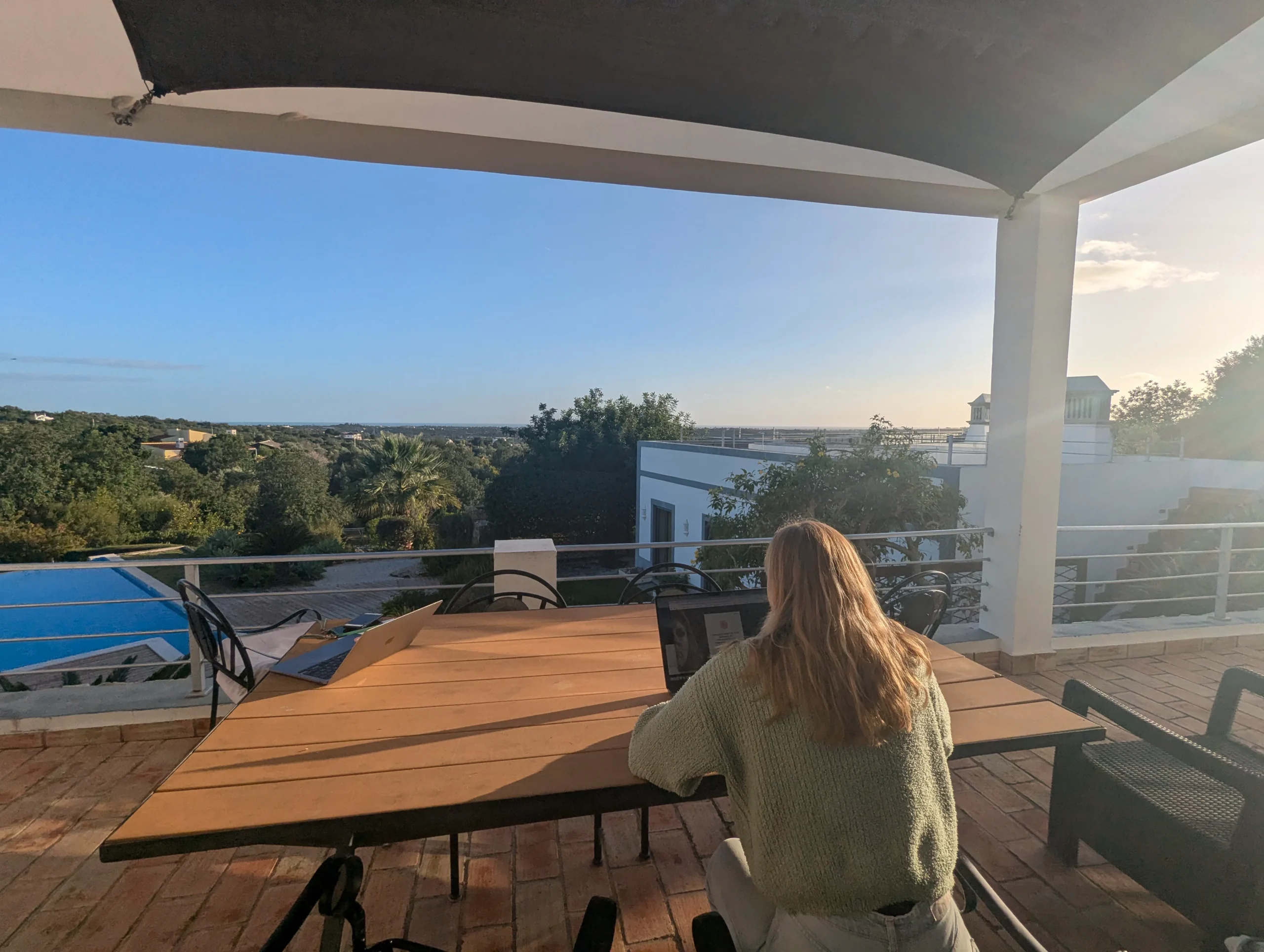
In its 2026 Global Workplace Survey, Gensler found that workers spent 26% of their workweek in locations other than home or the office, including coworking spaces and business travel. The survey is not specific to workations, but it shows why a suitable third-place workspace matters. Review the 2026 workplace survey and apply the same practical question to your stay: where will you actually work?
Ask your host about internet reliability, quiet areas for calls, desk and chair comfort, and whether workspace access is included. A photograph of a laptop on a table does not tell you whether the room is quiet or the chair supports a full workday. If you depend on video calls, check what backup options are available if the main connection fails.
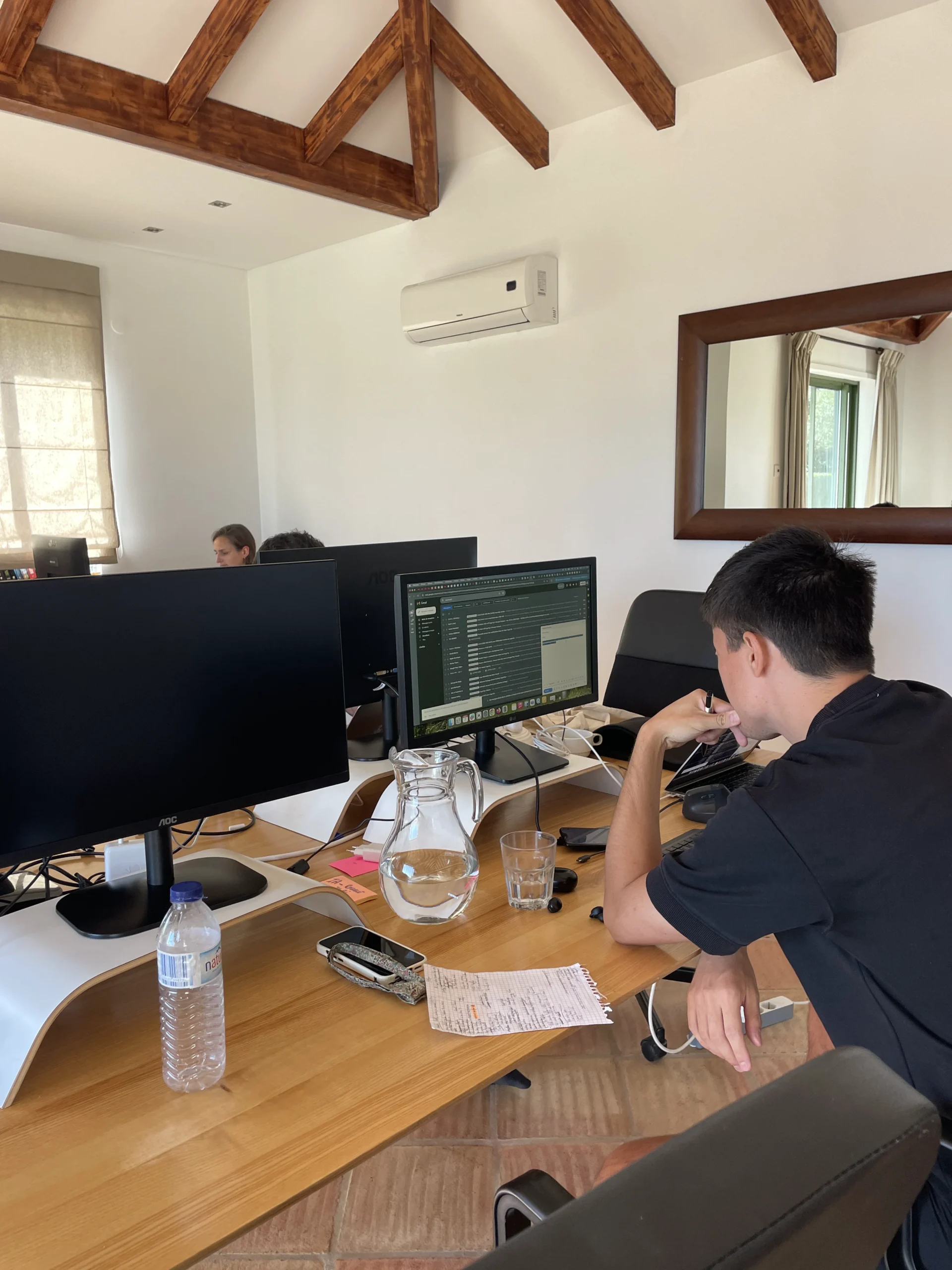
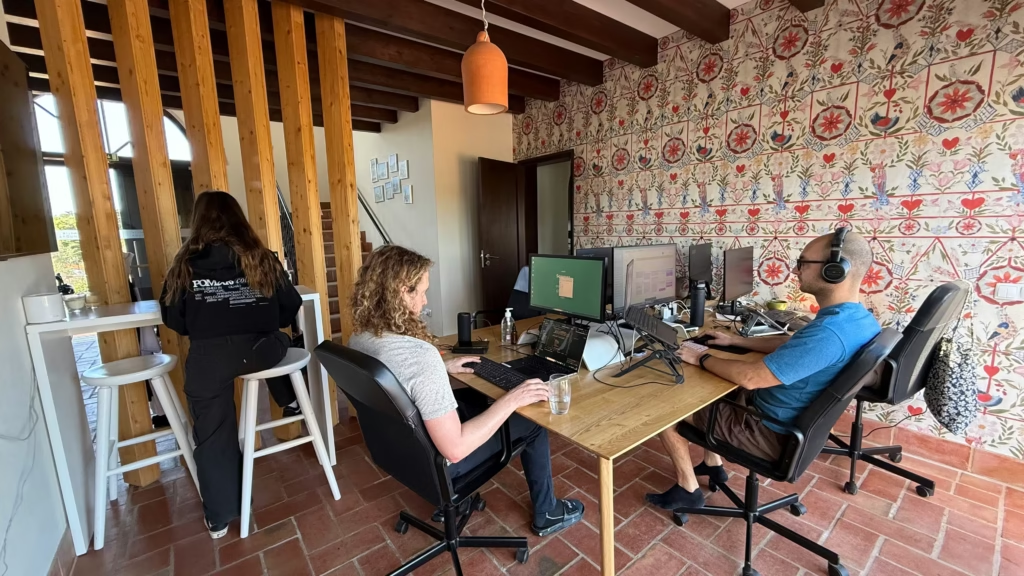
At POMAR, accommodation generally includes access to coworking and work equipment, alongside fiber broadband and Wi-Fi. Specific facilities can differ by location, so confirm what is available for your dates. If uninterrupted concentration is a priority, our article on deep work and workations explores how to make focused work part of a stay.
Make evenings and weekends part of the plan
Once work is covered, look at how you want to spend your free time. A city base might make museums, cafés and public transport part of an ordinary evening. A coastal or countryside stay can offer outdoor options, but it may involve more planning for errands and getting around. Check the practical details before choosing the scenery.
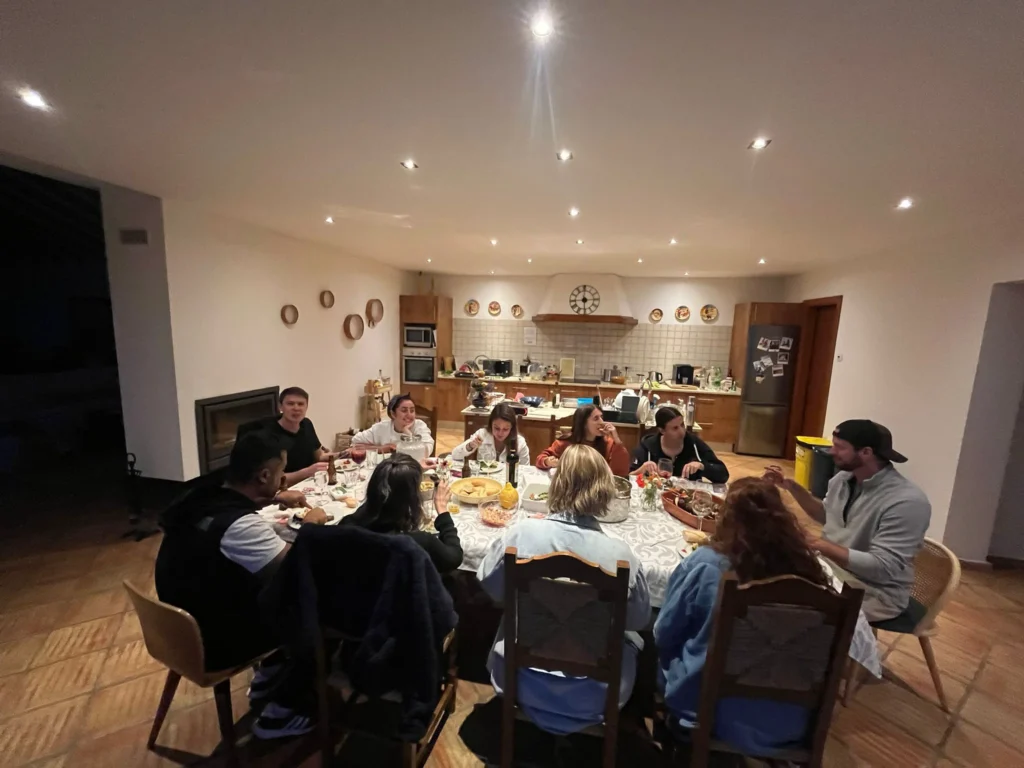
Community can also shape the experience, especially if you are travelling alone. Shared dinners, events or informal conversations provide opportunities to meet people without filling your calendar with organized activities. Ask how a place supports social connection, while making sure you still have the privacy you need to rest.
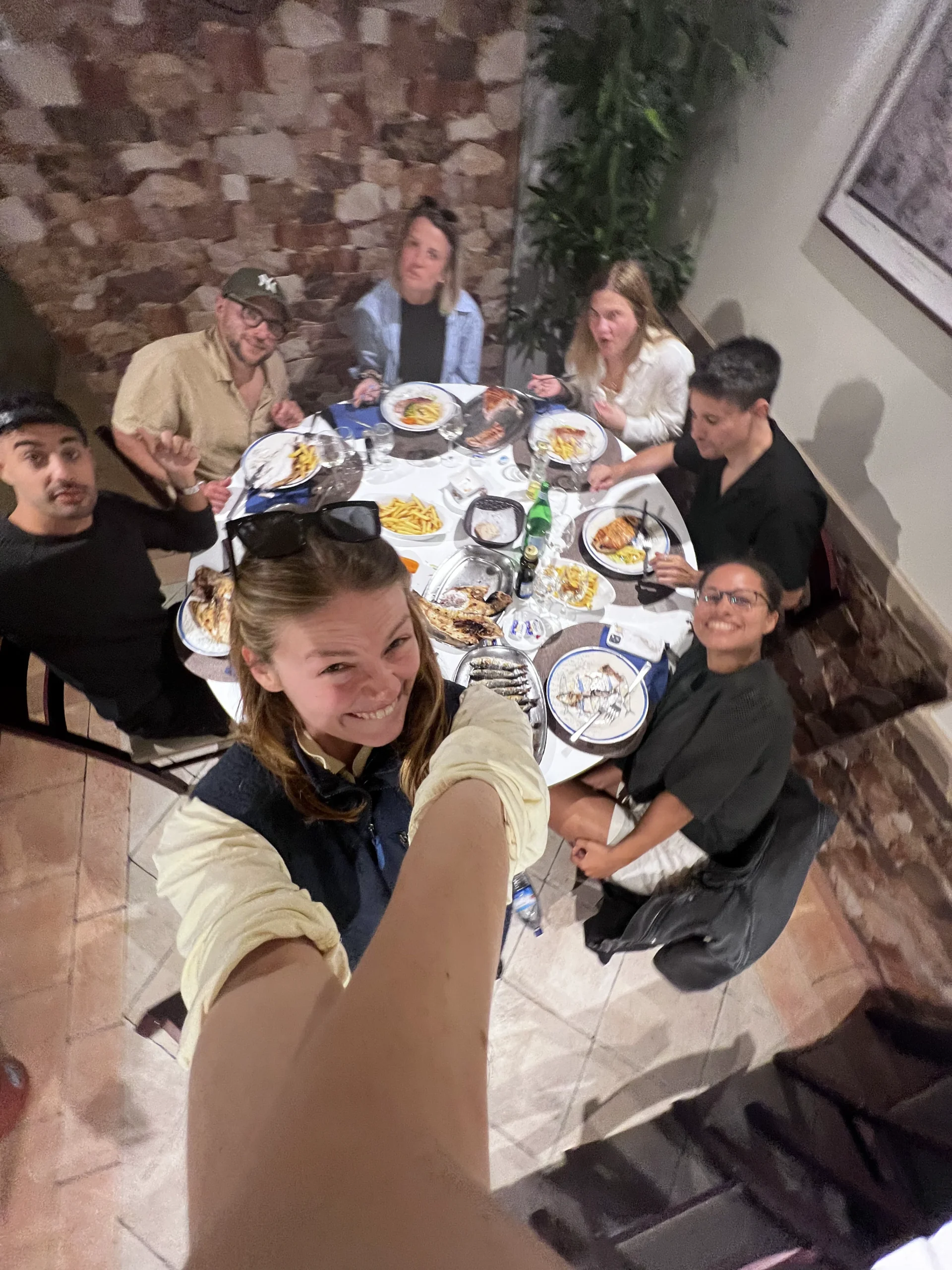
For a work-focused stay, look for a balance of private space and shared areas. POMAR’s accommodation includes private bedrooms and shared living spaces, with community activities such as weekly dinners. These features can make it easier to work independently and connect with other guests after hours.
Check permission, transport and total cost
A two-week booking is only useful if the arrangements work from arrival to departure. Confirm your employer’s policy for working from another location, meeting times, data security and any approval process before you pay. If you are travelling internationally, check the entry and work rules that apply to your circumstances using current official guidance.
Transport deserves equal attention. The U.S. Government Accountability Office has documented how telework has changed travel behaviour, including where and when people travel. Its findings concern community travel patterns, not individual workation rules, but they reinforce the value of checking how you will reach accommodation and manage local journeys. Read the GAO telework report for that broader context.
Compare the whole stay, not only the nightly rate. Add transport, meals, coworking, local travel and any optional activities to your budget. Check what is included, cancellation terms and minimum stay requirements. A location with a lower room price may require more spending or planning elsewhere.
Set a weekly rhythm before you arrive
Choose one or two work priorities for the trip, then decide which hours are fixed and which can move. Block your meetings and focused tasks first. After that, reserve time for meals, exercise and local exploration. This protects your work commitments without leaving your free time entirely to chance.
A useful routine could include a full workday on weekdays, a short walk at lunch and one planned activity on the weekend. Avoid scheduling a different excursion every evening. Winter daylight and weather can change your plans, so keep an indoor option and a flexible afternoon available.
Finally, keep the purpose of the trip clear. A workation is not a substitute for leave if you need a proper break from work. If you want a holiday without work responsibilities, take time off instead. If you want to work elsewhere for a while, build a stay that respects your workload and your need to switch off.
Choose a winter workation that fits your real routine
The right winter workation is not simply the warmest or most photogenic destination. It is the place where your work hours, workspace, transport and free time fit together. Confirm permission and accommodation details before booking, then plan a realistic weekly rhythm. A little preparation gives you a better chance of enjoying the change of scene while keeping work manageable.
Consider a winter stay in the Algarve
If you want a coastal base with a work-focused setup and a shared community, the Algarve is one option to explore. POMAR na praia operates from October 2026 to April 2027. Check the dates and location details that suit your plans before booking.
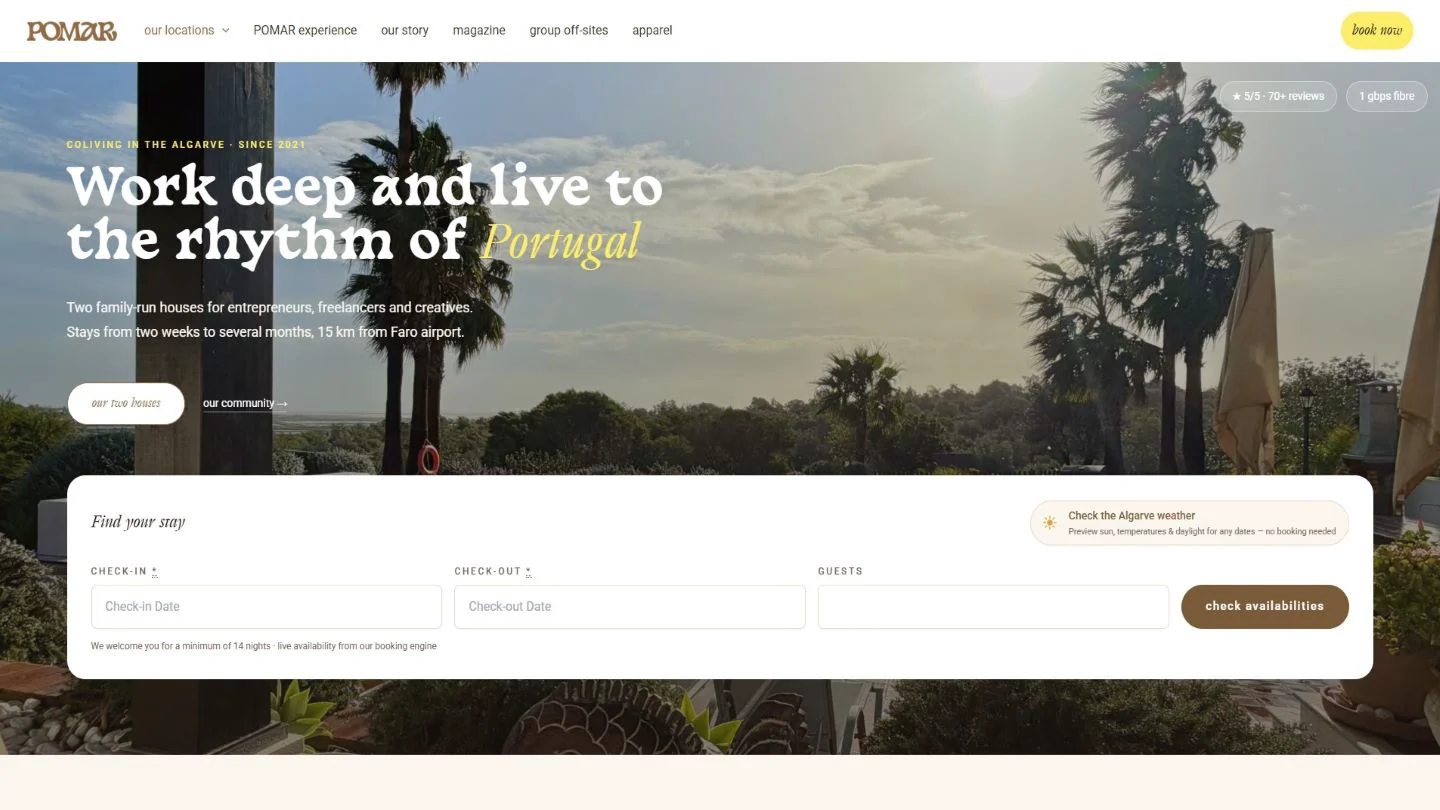
Our coliving combines private bedrooms, shared living areas, coworking access and hosted community activities. Available facilities vary by location and date, so confirm the details for your stay. We report having hosted more than 250 colivers since 2022. To see whether our coliving in the Algarve fits your winter work routine, review the locations and available dates.
Frequently Asked Questions
What is a winter workation?
It is a temporary stay in another location while you continue working remotely. The aim is to combine a normal work routine with time to experience your destination outside work hours.
How do you choose a destination for a winter workation?
Compare seasonal weather, work hours, internet, workspace, accommodation, transport and total costs. Choose based on the days you will actually spend there, not only on the destination’s reputation.
Should you ask your employer before travelling?
Yes, confirm your employer’s remote-work policy before booking. Ask about location approval, working hours, security requirements and any documentation relevant to your role.
Can you stay in the Algarve during winter?
Yes, but check seasonal opening dates and availability for your specific travel period. POMAR na praia operates from October 2026 to April 2027.
What should accommodation provide for remote work?
Check for dependable internet, a suitable desk and chair, quiet space for calls and a backup plan for connection problems. Also confirm whether coworking access is included or arranged separately.