
Summary: Málaga, Spain, is the strongest single answer if you mean mainland Europe: long term winter averages put southern Spain and Portugal among the mildest continental options. The Algarve, especially around Faro, is a close Atlantic alternative, while Seville suits sunny city breaks. Expect mild afternoons, cooler evenings, and winter rain rather than dependable beach heat.
Could you trade a heavy coat for a light layer without leaving mainland Europe? The clearest answer is southern Spain, with Málaga and the Costa del Sol among the mildest winter bases. Portugal’s Algarve is another strong choice, especially if Atlantic coast walks matter more than swimming. If you are planning a longer stay, our Algarve winter escape page offers a practical starting point for the region.
Here, the warmest place in continental Europe in winter means the mildest destination on the European mainland, excluding islands. Compare the same three winter months and the same climate period. That avoids matching one sunny afternoon in one city against another city’s monthly average. Climate normals describe typical conditions, not a forecast for winter 2026 to 2027.
What does “continental Europe” mean here?
Does the destination need to be on the mainland? For this comparison, yes. Southern Spain and Portugal count, as do mainland cities such as Málaga, Seville, Faro, and Valencia. The Canary Islands, Madeira, the Balearic Islands, Sicily, Malta, Cyprus, and Crete are excluded, even though some offer warmer winter conditions.
Use December through February as meteorological winter. Spain’s AEMET publishes climate normals using the 1991 to 2020 reference period, in line with the updated international standard. These long term averages help compare destinations consistently, but they do not tell you what the weather will be on your travel dates. AEMET’s 1991 to 2020 normals provide the basis for that kind of comparison.
Which mainland place is warmest in winter?
A 2026 compilation comparing climate normals for 56 European cities puts Málaga at the top among mainland destinations. Its December to February mean daily high is about 17.6°C (63.7°F). Seville and Valencia average about 17.2°C (63.0°F), while Faro is near 16.8°C (62.2°F), according to the 56 city winter comparison.
These numbers represent average daytime highs across three months, not temperatures maintained all day or a forecast for winter 2026 to 2027. Málaga is a practical first choice if you want a mainland city with a Mediterranean setting. The Algarve offers a similar mild winter appeal, but its Atlantic coast brings a different feel, with breezes and dramatic coastal scenery.

How do December, January, and February compare?
December, January, and February can feel quite different, even within the same destination. December often has mild afternoons, but it is part of the wetter season in much of southern Iberia. January is typically the coldest month, while February brings longer daylight and a gradual move toward spring. Rain, wind, and cloud can still interrupt sunny spells.
Monthly figures are more useful than a single seasonal average when choosing exact dates. Portugal’s IPMA publishes station level climate normals, including monthly temperature measures and precipitation. Check Faro’s values alongside the forecast before booking outdoor plans; a national average may not reflect conditions on the Algarve coast. IPMA’s climate normals offer a local reference.
Where should you go for sun, coast, or city life?
Choose a destination for the kind of winter days you want, not just for a small difference in average temperature.
- Málaga suits a city stay with Mediterranean coastal walks and cultural attractions nearby.
- Seville suits historic streets and daytime sightseeing. As an inland city, it can feel cooler after sunset.
- The Algarve suits coastal walks, smaller towns, and outdoor exploration. Our article on visiting the Algarve during winter covers the seasonal appeal, while winter activities in Faro and Olhão offers local ideas.
For a winter break focused on scenery and walking, the Algarve’s coast can be more appealing than a slightly warmer city average. If sunshine is your priority, compare the forecast for your exact dates and consider how much wind or rain would affect your plans.
How reliable is winter warmth on the mainland?
Europe’s recent winters show why climate averages should not be treated as a promise. Across European land, winter from December 2025 to February 2026 averaged 0.09°C above the 1991 to 2020 reference, while winter 2019 to 2020 was 2.84°C above that baseline. The Copernicus winter analysis describes continent wide conditions, not the weather in a particular southern city.
For travel planning, use normals to shortlist destinations, then check a local forecast shortly before departure. Pack light layers, a warmer evening layer, and something for rain. Even in Málaga or Faro, a bright afternoon does not guarantee a warm evening, dry walking conditions, or comfortable swimming temperatures.
How to choose the right base for your trip
If your winter trip also includes remote work, choose a base that supports both daily routines and time outdoors. A private room, reliable internet, and a suitable workspace matter as much as being near the coast. Our article about a winter workation explores how to combine focused work with a change of scenery.
POMAR’s Algarve coliving provides private rooms, coworking access, shared living spaces, on site hosts, and organized activities. More than 250 colivers have stayed with us since 2022. For a longer visit, that hosted setup gives you a place to work and connect with others while exploring the region at your own pace.
Choose mainland warmth with realistic expectations
If winter warmth on the mainland is your priority, start with Málaga; compare the Algarve for Atlantic landscapes, and Seville for city culture. Use long term climate normals to narrow your options, then check local conditions for your dates. The warmest mainland European option in winter is usually found in southern Spain, with southern Portugal close behind.
Make the Algarve a winter base
For a winter visit, choose a base that matches your pace, whether you want coastal walks, focused work, or time in a quieter setting. Our Algarve locations in Estoi and Olhão combine private rooms, coworking access, shared living, and on site hosting. More than 250 colivers have stayed with us since 2022, bringing work routines and local connection together.
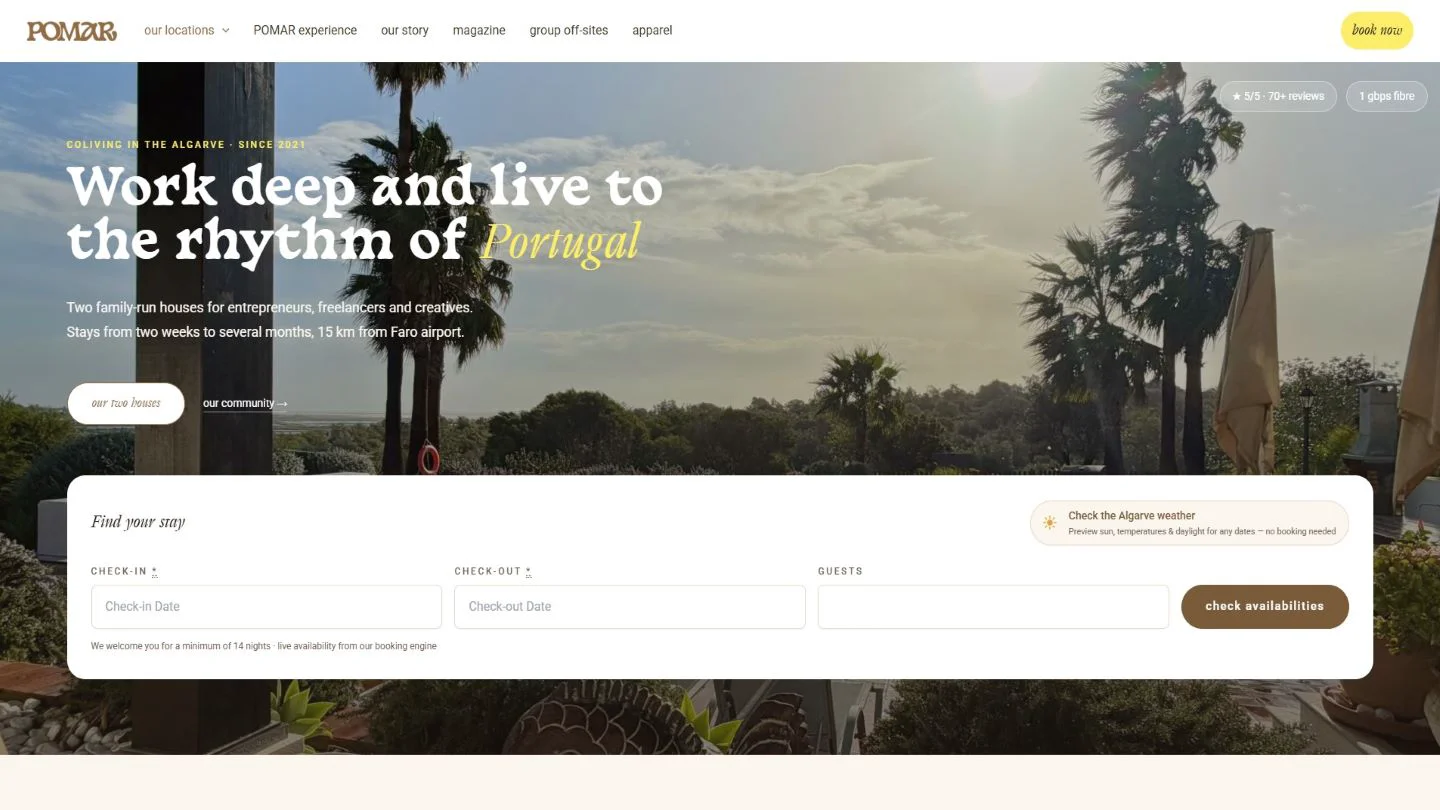
For a longer stay, our coliving combines fiber broadband, office equipment, shared spaces, and organized activities. You can choose a countryside setting or a beachside location, then check availability and stay details directly. Explore coliving in the Algarve to see whether a longer winter base suits your plans.
Frequently Asked Questions
What is the warmest place in continental Europe in winter?
Málaga is a strong single answer, based on average winter daytime highs among mainland cities. The Algarve and other parts of southern Spain are close alternatives, depending on your preferred setting.
Is the Algarve warm enough to visit in winter?
Yes, the Algarve is a mild mainland option for coastal walks and outdoor exploration. Expect cooler evenings and some rain, and do not assume the sea will feel warm enough for swimming.
Are the Canary Islands included in this comparison?
No. The Canary Islands are part of Spain, but they are islands, so they fall outside this mainland comparison. Madeira, Sicily, Malta, and Cyprus are also excluded.
Which winter month is warmest in southern Europe?
December often starts with mild conditions, while February has longer days and signs of spring. January is typically the coldest month, but local weather can vary from year to year.
Can you work remotely during a winter stay in the Algarve?
Yes. POMAR’s Algarve coliving combines private room accommodation with coworking access, shared spaces, and high speed connectivity, which can suit a longer workation.